
Rio Carnival 2027: The Complete Guide
Rio Carnival 2027 runs from Friday 5 to Tuesday 9 February, with the Champions' Parade on 13 February. Buy Sambadrome tickets via LIESA or Ticketmaster Brasil, free rehearsals start 23 January, and street blocos run from mid-January to the weekend after Ash Wednesday.

If you've read our piece on the history of Rio Carnival, you'll know this isn't just a big night out. It's a few hundred years of music, resistance and sheer joy, all packed into one city for one week.
This is the practical half. What's on, when, where to get tickets without being fleeced, and the handful of small habits that mean you'll spend the week dancing rather than dealing with something you'd rather not.
When is Rio Carnival 2027?
The official dates are Friday 5 February to Tuesday 9 February 2027. Ash Wednesday, when it's all supposed to stop, is Wednesday 10 February. The Champions' Parade, where the top six samba schools go round again, is Saturday 13 February.
But here's the thing nobody puts on the poster: if you land on the Friday, you've already missed a fortnight of it.
Rio starts warming up in January. Street parties are out from the middle of the month. The samba schools hold full rehearsals at the Sambadrome from 23 January, and they're free. Flights and hotels in late January cost a fraction of what they do in Carnival week. If your dates are flexible, arriving in the last week of January and staying through is far and away the best value trip you can plan.
The free rehearsals (ensaios técnicos)

This is the best-kept secret in Rio. In the two weekends before Carnival, the samba schools run full rehearsals down the Sambadrome: the real drum sections, the singers, the sound and lighting tested at full belt. No costumes, no floats, and no ticket. Entry to the grandstands is free. You walk in, find a spot, and watch thousands of drummers do their thing.
Here's the 2027 calendar, confirmed by LIESA (the league that runs the parades):
- Saturday 23 January: children's schools from 5.30pm, then União de Maricá, Beija-Flor de Nilópolis and Paraíso do Tuiuti
- Sunday 24 January: Unidos de Vila Isabel, Mocidade Independente de Padre Miguel, Unidos da Tijuca
- Saturday 30 January: Acadêmicos do Salgueiro, Imperatriz Leopoldinense, Portela
- Sunday 31 January: opens with the Lavagem da Sapucaí, the traditional washing of the avenue, then Estação Primeira de Mangueira, Acadêmicos do Grande Rio, Unidos do Viradouro
Start times beyond the children's schools haven't been published yet. They generally get going in the evening and run late. We'll update this guide with the exact times as soon as LIESA confirms them.
The parades: who's on when

Série Ouro (the second division) parades on Friday 5 and Saturday 6 February. Don't write it off. The tickets are much cheaper, the ground is less packed, and these schools are fighting for promotion, so nobody is holding anything back.
The Special Group, the main event, the one you've seen on telly, runs over three nights, four schools a night:
Sunday 7 February
- União de Maricá
- Beija-Flor de Nilópolis
- Paraíso do Tuiuti
- Unidos de Vila Isabel
Monday 8 February
- Mocidade Independente de Padre Miguel
- Unidos da Tijuca
- Acadêmicos do Salgueiro
- Imperatriz Leopoldinense
Tuesday 9 February
- Portela
- Unidos do Viradouro
- Acadêmicos do Grande Rio
- Estação Primeira de Mangueira
The Champions' Parade is on Saturday 13 February: the winner plus the five schools behind them, doing it all again. It's often the smartest ticket of the lot. Same floats, same costumes, same noise, smaller crowd, lower price.
A word on timing. Each school gets roughly 60 to 70 minutes on the avenue, and a night's parading starts around 10pm and finishes when the sun comes up. That is not an exaggeration. Don't book anything for the following morning, and don't book a 9am flight home on the Wednesday.
Want to see where your money actually goes? BudgetBro tracks it in any currency, free.
Where to buy tickets (and where not to)
Start with the official sources:
- LIESA (liesa.org.br/ingressos), the organisation that actually runs the parades.
- Ticketmaster Brasil (ticketmaster.com.br/event/riocarnaval), the official ticketing partner.
Have a search for "Rio Carnival tickets" and the first page of Google will be almost entirely resellers and tour operators. They're not necessarily dodgy, but they buy in bulk and sell on with a hefty mark-up, and some of them look far more official than they are. Buy direct and you'll pay a lot less for the same seat.
Quick guide to what you're buying:
- Arquibancada: grandstand benches. Cheapest, unreserved, you get there early and grab a spot. Brilliant atmosphere.
- Cadeiras / allocated chairs: numbered seats, usually a step up in price.
- Frisas: boxes right at track level, close enough to feel the drums in your chest.
- Camarotes: hospitality boxes with food and drink included. Lovely if the budget stretches.
Sectors near the judges' stands see the schools at their absolute sharpest. Sector 9 is the main tourist sector with numbered seating. The sectors at the far end are the cheapest, and while the schools are knackered by the time they get there, the crowd is usually having the best night of anyone in the building.
Tickets for 2027 have been on sale since autumn 2026. Exact prices haven't been published yet, we'll update this section as soon as LIESA and Ticketmaster confirm them. The good areas go first regardless, so don't sit on it.
Street blocos
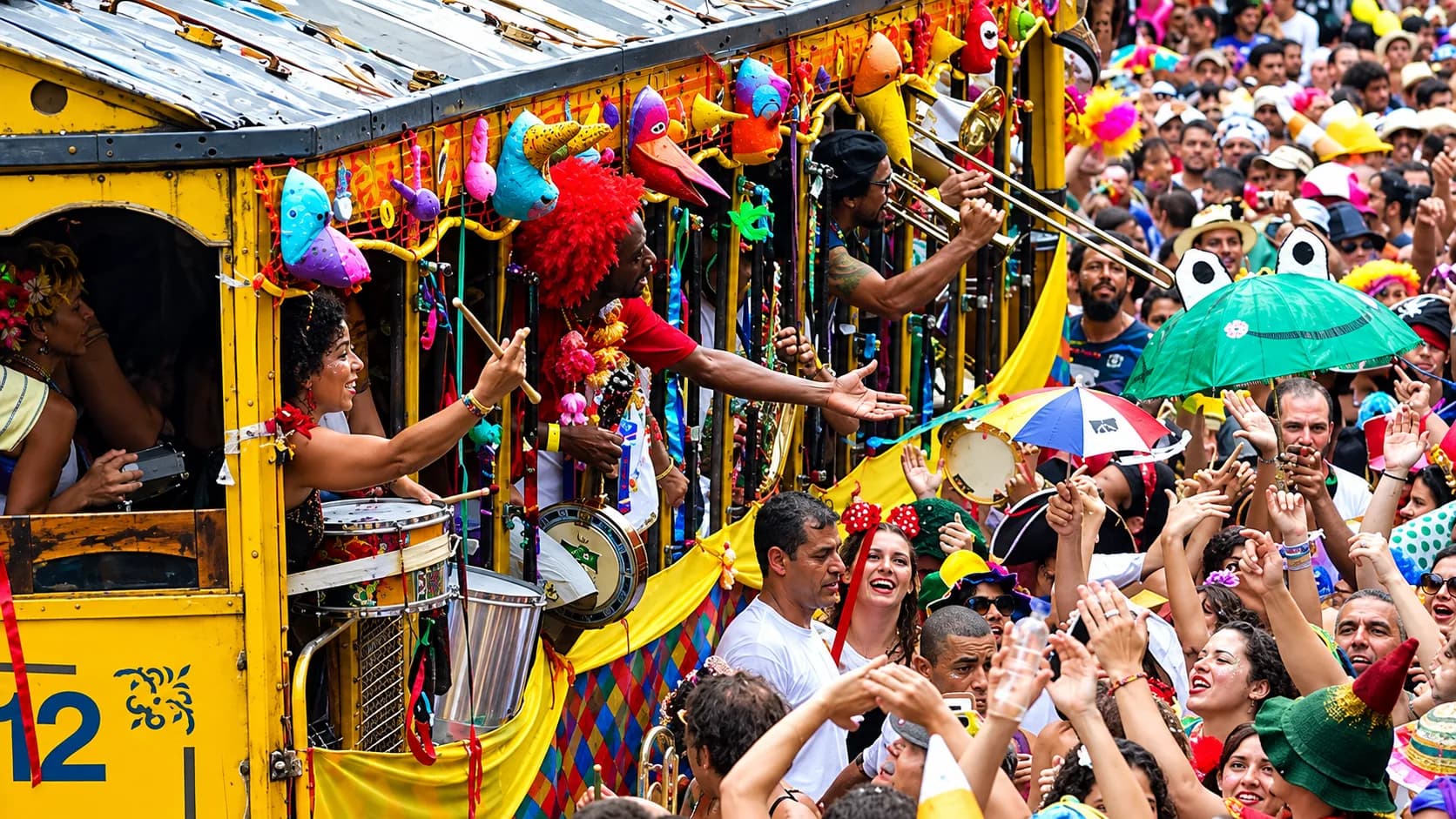
For most cariocas, this is Carnival. Blocos are free street parties, anything from fifty people and a couple of drums winding through Santa Teresa, to a million people following a lorry through the city centre.
The official list, with dates, start points and times, is published by the city at carnaval.rio. It usually lands in December or January. We'll update this article with the full bloco list and dates the moment it's published.
What's worth knowing in advance:
- Blocos run from mid-January right through to the weekend after Ash Wednesday. The week itself is the busiest, but the January ones are often the most fun.
- Some start at 7am. That is not a typo.
- The concentração time on the listing is when people gather, not when it moves. It'll be an hour or two before anything actually sets off. Nobody minds.
- The big ones move through the streets, so where it starts is not where it ends.
Where to stay, and a warning about prices
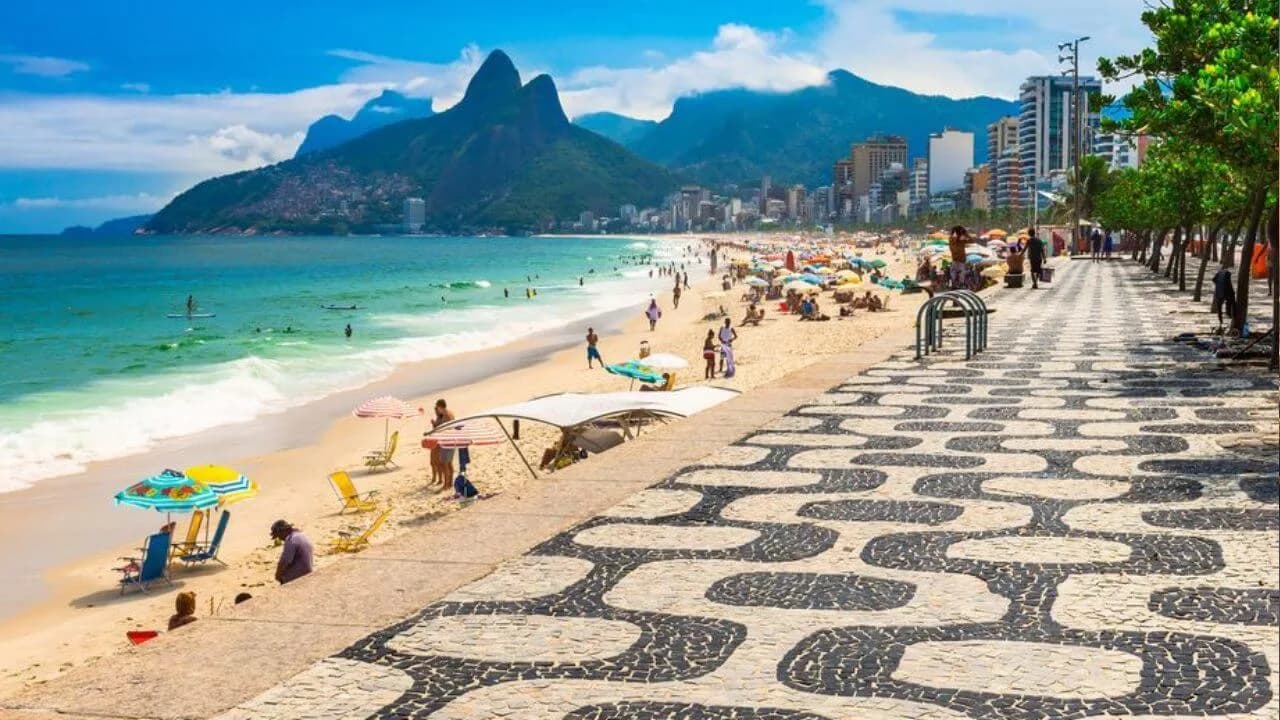
Book early, and brace yourself. Rooms in Carnival week routinely go for two to four times the normal rate, and a lot of places bring in four or five-night minimum stays. It's worth knowing why: rent per square metre in Copacabana, Ipanema and Leblon has roughly doubled since 2021, and locals are increasingly priced out of their own neighbourhoods, moving to areas like Botafogo or across the bay to Niterói. That same squeeze pushes up short-term prices too, and a beachfront address doesn't automatically mean better quality for your money.
- Copacabana: the classic choice, right on the beach and on the metro, with hotels at every level. It's also the most in-demand address in the city, so book early, and don't assume the price buys you a well-kept building; a lot of the stock here is older and the rent has climbed faster than the upkeep.
- Ipanema and Leblon: smarter, calmer, and currently the most expensive corner of the city to rent in. Still well connected and a lovely base if the budget stretches.
- Centro (Cinelândia and Carioca): genuinely good value, and for Carnival specifically, well placed. It sits between the Sambódromo and Zona Sul, it's on the metro, and it's walking distance from Glória, Lapa, Largo do Machado and Santa Teresa, all of which have proper traditional blocos, including Cordão do Bola Preta and Monobloco. Zona Sul is about 20 to 30 minutes away on the metro from here.
- Botafogo and Flamengo: the value pick if you still want to be close to the beach areas. Good metro links, proper local restaurants, and noticeably cheaper than Copacabana or Ipanema for a similar flat.
- Santa Teresa: beautiful, cobbled and hilly, close to the Sambódromo and with its own bloco scene. Charming by day, but you'll want a taxi or a short walk down into Centro at night.
- Lapa: the nightlife district, right next to Centro. If you want to be in the thick of it, here it is. If you want to sleep, pick a street or two further out.
Two bits of advice that'll save you more than any discount code: book something refundable if you possibly can, and book within walking distance of a metro station. The second one will save you hours over the week.
And here's the thing about that 20 to 30 minute ride from Centro into Zona Sul: at this time of year, the party often starts right there on the platform. People singing, a bit of samba breaking out inside the carriage, strangers dancing between stops. Thirty minutes flies by like five.
Heat, clothes and water
February is the height of the Brazilian summer. Mid-thirties, humidity that hits you like a wall when you step outside, and a sun that will have you questioning your decisions by about eleven in the morning.
- Light, loose and cheap. Nothing you'd be gutted about if it got beer spilled down it.
- Trainers, not flip-flops. A bloco means hours on your feet on hot pavements, and there's usually broken glass about by the afternoon.
- Factor 50+, and actually reapply it. A hat and sunglasses you won't cry over if they vanish.
- Drink water constantly. Buy a bottle from a street seller every hour whether you fancy one or not. Coconut water is sold on every corner and does the job better than anything else.
- Beer doesn't count as hydration. Alternate: one water for every drink. This is the single thing that decides whether you're out again tomorrow or in bed with a headache
Staying safe, honestly
Let's be straight with you: Rio has pickpockets, and big crowds are where they work. Equally true is that the overwhelming majority of visitors have a brilliant week and never see so much as a hint of bother. The difference is almost entirely down to a few simple habits.
- Wear a bum bag, at the front. Everyone does it, locals included, so you won't stand out. A backpack behind you is an open invitation.
- Take only what you need. Your phone, a photocopy of your passport, and a slip of paper with your hotel's address written on it. That bit of paper matters. If your phone dies or disappears, you still know where you're staying and you can hand it to a taxi driver.
- Put your phone on a strap or lanyard. And don't stand in the middle of a crowd with your arm out filming for ten minutes.
- Leave the good stuff in the hotel safe. Passport, jewellery, watch, nice sunglasses. Gold chains especially: necklaces get snatched, and it's the one thing locals will tell you without being asked.
- Agree a meeting point with your group before you go in. Phone signal inside a big bloco is effectively zero, so if you get separated, you need a plan you made earlier.
- Stick to public transport during normal daytime hours. It's what most cariocas use to get around, and during Carnival it beats sitting in traffic every time.
- Add your card to the Uber or 99 app beforehand, and never request or pay for a ride in cash. It's safer, it's traceable, and it avoids any awkward negotiation on the street.
- Late at night, a licensed taxi or a ride app makes more sense than public transport or walking back across the city.
None of that is dramatic. It's the same common sense you'd use at a festival back home, just applied properly.
Getting around
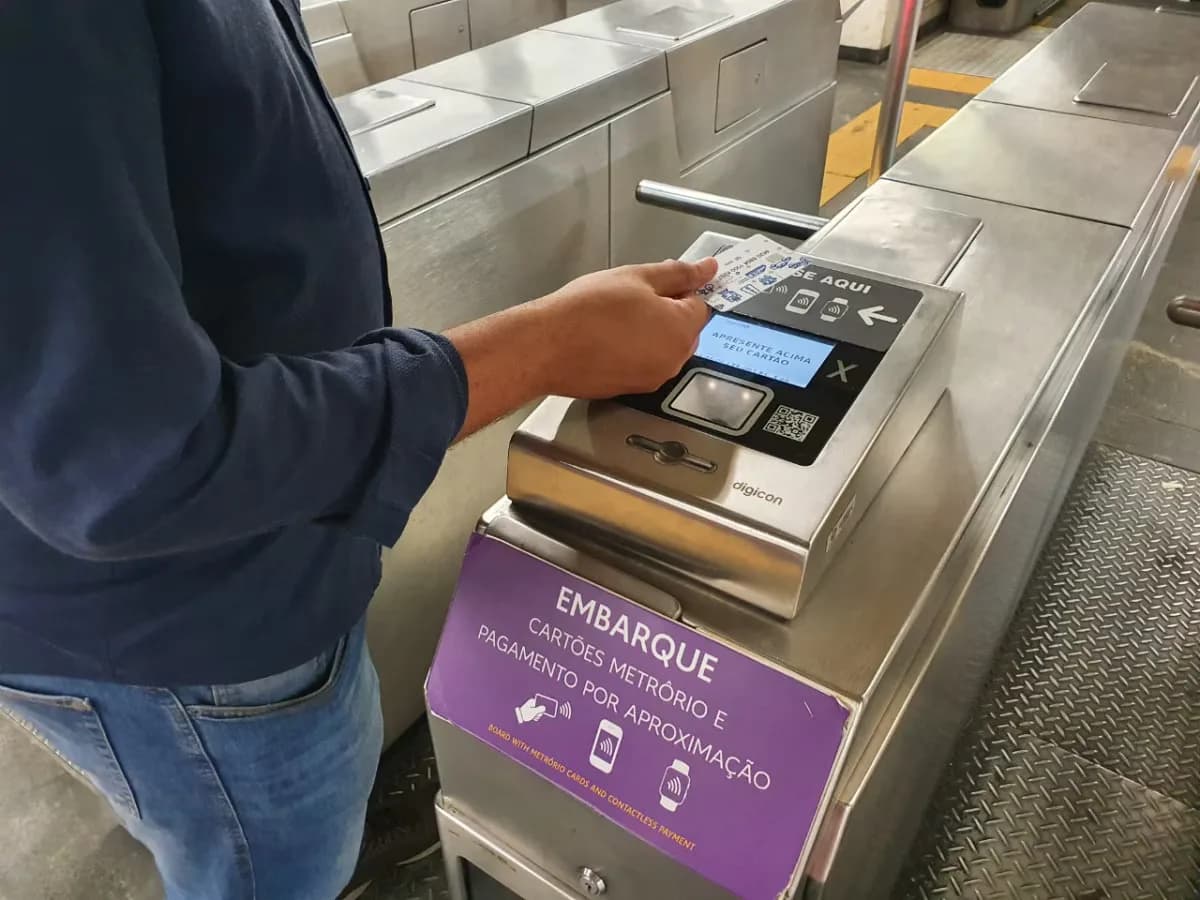
Public transport, every time. Driving during Carnival is miserable: roads shut at short notice, and parking is a fantasy.
- The metro is the best thing in the city. Clean, air-conditioned, fast, and it runs extended hours through Carnival, usually round the clock from the Friday until Ash Wednesday morning.
- You can tap in with a contactless debit or credit card, or your phone or watch, straight at the gate. No need to queue for a travel card.
- The VLT tram covers the centre and the docks, and it's handy for the Sambadrome end of town.
- Buses go everywhere but get absolutely rammed in Carnival week.
- Ride apps work fine. Expect surge pricing and expect your driver to be rerouted round closed roads.
Paying for things
Brazil is very nearly cashless, and it's a pleasant surprise for most visitors. Cards work everywhere: bars, restaurants, shops, and yes, the bloke selling cold beer out of a cool box on the kerb will have a card machine in his back pocket.
One rule, and it's an important one: always check the amount on the screen before you tap. Typos happen, and so does the occasional extra zero that isn't a typo. Look at the number, then tap. It takes two seconds and it's the single most useful habit you can pick up.
Let your bank know you're travelling so the card doesn't get blocked, and keep a small amount of cash on you, R$50 to R$100, for the rare stall that's having machine trouble.
The bottom line
Read all that back in one go and it can sound like a list of warnings. It really isn't. It's a bum bag, a bottle of water, factor 50, and a glance at a card machine before you tap. Four small things.
What you get for them is a week in a city that throws everything it has at being happy. Drums you feel in your ribs before you hear them. Streets closed off so a few thousand strangers can sing the same song at nine in the morning. Costumes that took a year to build, going past at arm's length. People who will pull you into the dance because you're stood on your own and that simply won't do.
The problems are small. The party is enormous. Sort the sensible bits before you go, and then forget about them entirely.
Rio Carnival 2027: 5 to 9 February, with the Champions' Parade on 13 February. Go.
Comments
No comments yet. Be the first to share your thoughts.
Related Articles

Mini Lesson 9: The "Well Done" Trap and Words That Don't Translate
A real WhatsApp text turned into a lesson, why "well done" and "miserable" don't mean what you think in Portuguese
· 2 min read

Mini Lesson 8: Why Brazilians Call Strangers "My Love"
Brazilian shop staff, drivers and strangers call you "meu amor" or "minha flor" with zero romantic intent, but the same warmth works differently between men. Here's how it actually breaks down.
· 2 min read

This Budget Airline Just Added Its First Flights to South America, From $99
Headlines are circulating about a budget airline's first nonstop flights to South America from $99, but the confirmed details are thin. Here's what to check before you book.
· 3 min read
Latest Articles
View all articles
Eurostar Cuts London to Paris and Brussels Fares to £39
Eurostar has dropped fares to £39 for autumn journeys between London and Europe, though full route and date details are still thin.
· 2 min read

Liverpool Airport Adds New Routes to Europe's Christmas Markets
The St Helens Star reports that Liverpool John Lennon Airport has launched flights pitched at travellers heading to Europe's Christmas markets, though full route details aren't yet public.
· 2 min read

Tourist Taxes in Europe: What Venice and Barcelona Actually Charge
Tourist taxes in Europe are set city by city rather than EU-wide, and the details making the rounds about a connection to Visit Ukraine aren't something we can stand behind without more to go on.
· 2 min read