
What is the new EU Entry/Exit System?
No more stamps! The EU's digital border goes live across across 29 European countries today: 10th April, 2026.
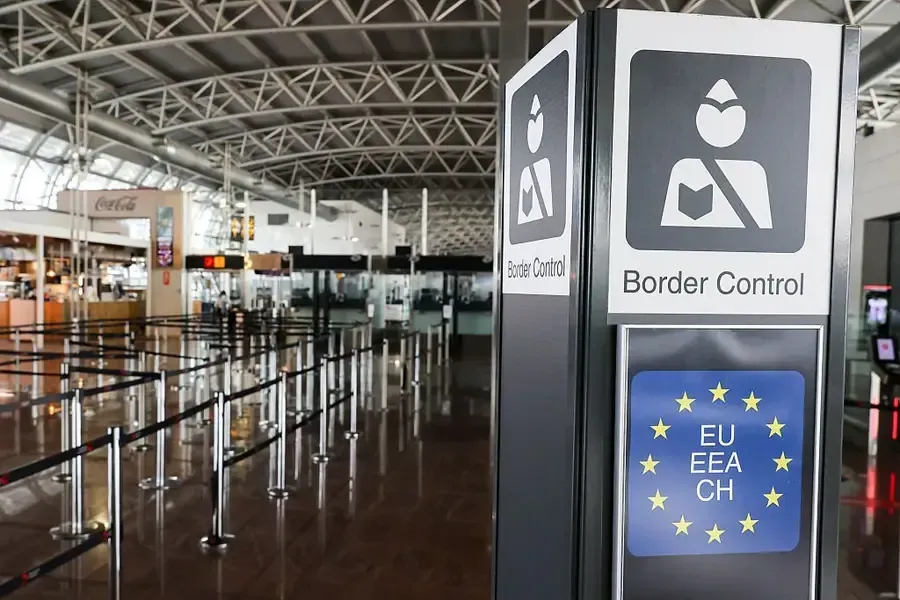
What Is the EU Entry/Exit System (EES)?
If you’ve travelled around Europe before, you’ll know the routine. You land, join the queue at passport control, hand your passport over, the officer stamps it, and you’re through. Nothing complicated. That system is now, however, being replaced. Bad news for stamp collectors!
The EU Entry/Exit System, usually shortened to EES, is a new digital border system that records when non-EU travellers enter and leave the Schengen Area. Instead of stamping your passport, border control logs your trip electronically and links it to biometric data like a facial photo and fingerprints.
For travellers, the main change is what happens the first time you cross the border. When you arrive, your passport is scanned and your biometrics are recorded. That creates a digital travel record so the system knows when you entered Europe and when you leave.
Once that record exists, future trips become simpler. Border officers no longer rely on stamps to see how long you’ve stayed. The system automatically tracks it.
This applies to anyone visiting Europe from outside the EU for short stays. That includes travellers from the UK, the US, Australia and most other visa free countries.
On paper it sounds like a technical change happening behind the scenes. In reality it’s a pretty big shift in how European borders work. Passport stamps disappear, biometrics replace them, and your travel history in the Schengen Area becomes fully digital.
You can read more about the new Travel to Europe Mobile App
Why the EU Is Introducing the Entry/Exit System
For decades Europe relied on passport stamps to track who entered and left the Schengen Area. It worked, but it was also a blunt system. A small ink stamp in a passport was often the only record of when someone arrived or departed, and border officers sometimes had to manually check whether a traveller had stayed too long. The Entry/Exit System moves that process into a digital database.
Instead of relying on stamps, the system records the date and location of every entry and exit automatically. Border authorities can instantly see how long someone has been in the Schengen Area and whether they are still within the 90 days allowed for visa free travel.
Security is another reason behind the change. Because the system links each entry to biometric data like fingerprints and facial recognition, it becomes much harder for someone to enter Europe using multiple identities or different passports.
There is also a practical side to it. Passport stamps are slow, inconsistent and easy to miss. A digital system removes that guesswork and replaces it with a clear record of movements across the border.
For travellers, none of this changes the rules of visiting Europe. The 90 days in any 180 day period rule still applies. What changes is how closely it can be monitored. Instead of stamps scattered through a passport, the system calculates it automatically.
Want to see where your money actually goes? BudgetBro tracks it in any currency, free.
How the EU Entry/Exit System Works
From a traveller’s perspective the process is fairly simple. The main difference is that instead of a passport stamp marking your arrival, your entry into the Schengen Area is recorded digitally in the system.
The first time you cross the border after the system launches, border control creates a digital travel record linked to your passport. Your passport is scanned, a facial photograph is taken and your fingerprints are collected. These details are stored together so the system can identify you the next time you enter Europe.
That record logs exactly when and where you entered the Schengen Area. When you leave, the system records your exit as well. Those two points create a clear record of how long you stayed, removing the need for border officers to manually check stamps or count days in a passport.
What Happens the First Time You Enter
The first time you enter the Schengen Area under the new system may take slightly longer because this is when your biometric record is created. At passport control your passport will be scanned and you will be asked to provide a facial photo and fingerprints. This information is then linked to your passport details and stored in the Entry/Exit System.
In practical terms this means a few extra steps compared to the old stamping process. Many airports and ferry ports across Europe are installing kiosks or biometric scanners to handle this part of the registration.
What Happens on Future Trips
Once your biometric record exists, future trips become much simpler. Border control already has your details in the system, so your passport and biometrics only need to be matched to the existing record.
That means the process can be quicker than the old system of manual passport stamps. In many places travellers will eventually be able to use automated border gates, where the system verifies their identity and records their entry without a full manual check.
Who the Entry/Exit System Applies To
The system applies to travellers visiting the Schengen Area from outside the European Union. If you hold an EU passport, nothing changes for you. The same generally applies to people with residence permits or long term visas.
For everyone else, this is where the change happens. Travellers from visa free countries such as the UK, the United States, Canada, Australia and New Zealand will have their entries and exits recorded digitally instead of receiving passport stamps.
The rule itself is not new. Most visitors can stay in the Schengen Area for up to 90 days within any 180 day period. The difference is that the Entry/Exit System tracks that automatically instead of relying on passport stamps and manual checks.
Entry/Exit System vs ETIAS
A lot of travellers confuse the Entry/Exit System with another upcoming system called ETIAS, but they are not the same thing.
The Entry/Exit System is what happens at the border. It records when you enter and leave the Schengen Area and links that information to your passport and biometric data.
ETIAS is a travel authorisation that will eventually be required before visiting Europe. Travellers will need to apply online before their trip and receive approval before boarding their flight.
The easiest way to think about it is this. ETIAS happens before you travel. The Entry/Exit System happens when you arrive.
Together they are part of the EU’s plan to modernise border control, but the Entry/Exit System is the change travellers will notice first.
Questions? Ask in the comments.
More reading to help you plan: Solar Eclipse 2026, Europe vs Southeast Asia and The GHIC / EHIC explained.
Comments(1)
Nooooooooo, the stampssssssss
We know :( It just means you'll have to travel a little further for them now!
Related Articles

EU roaming charges 2026: which UK network is cheapest?
O2 and giffgaff charge nothing to roam in Europe. Three, Vodafone and EE charge by the day. Here is what each costs on a real trip.
· 7 min read

GHIC and Travel Insurance in Europe: What the Card Won't Cover
The free UK GHIC gets you state healthcare in Europe, but it won't fly you home, pay for a private clinic or a mountain rescue. Here's exactly where it stops.
· 2 min read

Tourist Taxes in Europe 2026: Barcelona, Venice and Edinburgh
Barcelona doubled its tourist tax in April, Edinburgh started a 5% visitor levy in July, and Venice's day-tripper fee has ended for 2026. What each one costs you.
· 2 min read
Latest Articles
View all articles
Pay in pounds or euros abroad? Every question answered
The card machine asks if you want to pay in pounds or euros. Here is which button to press, why, and what to do if a shop or cash machine picks for you.
· 6 min read

Why Your Flight to America Goes Over Greenland
Look at the flight map on a London to LA flight and it bends up over Greenland. It isn't a detour. It's the shortest way round a round planet, and here's why.
· 1 min read
Best Time to Book Christmas Flights in 2026: The Window Is Now
Which?'s research on Skyscanner data says December flights are usually cheapest booked 5 to 11 weeks out. Christmas is about 10 weeks away. We checked real Christmas fares too.
· 3 min read