
Thailand DTV Visa Guide (2026): New Rules & How to Apply
Since 31 August 2026, Thailand's DTV visa can only be applied for from your home country or country of permanent residence, and applicants must now submit a criminal record check as part of the mandatory documents.
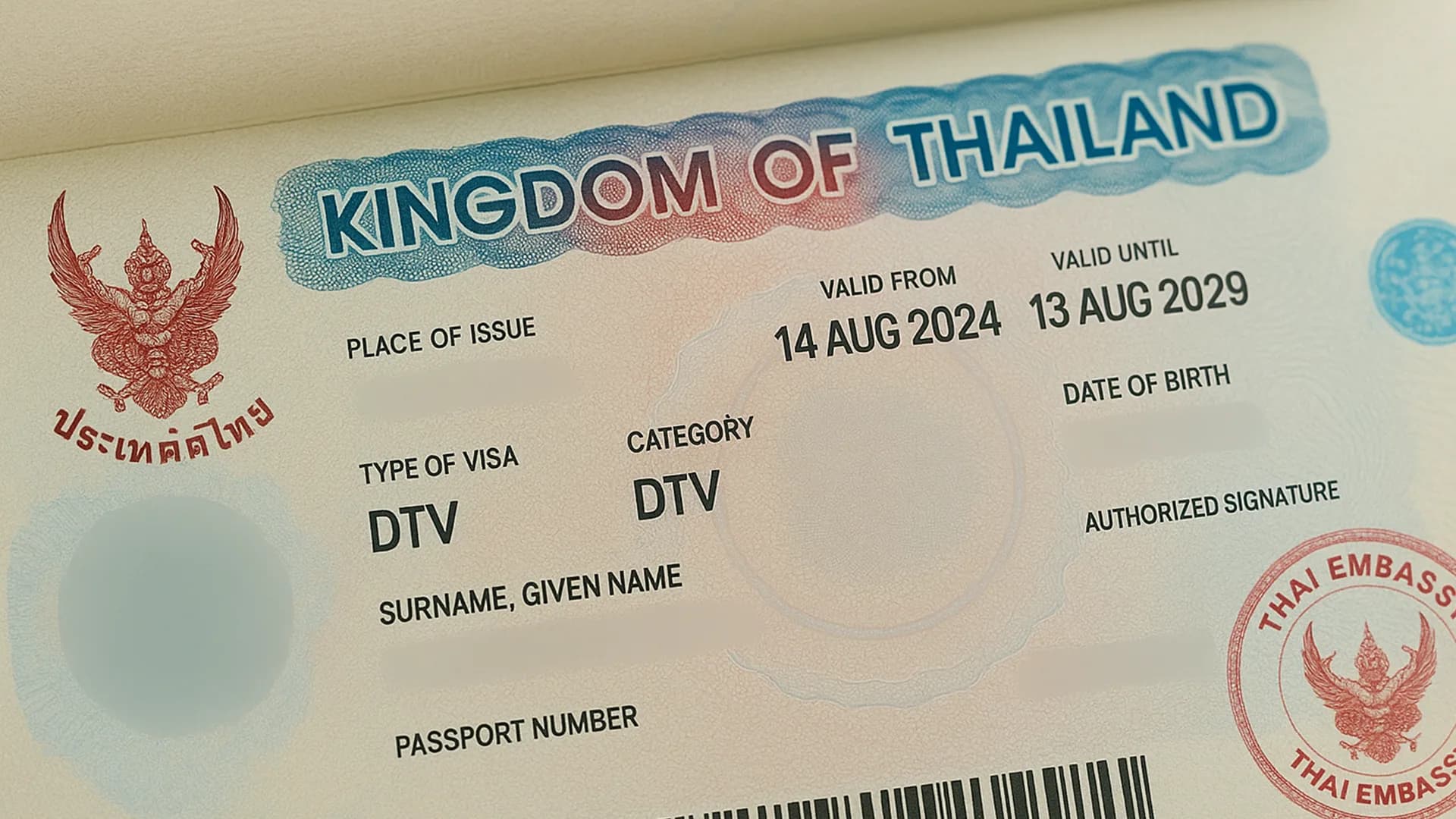
Thailand's Destination Thailand Visa (DTV) Full Guide 2026
This article has been updated to reflect changes announced from August 2026
The official announcement hasn't been dropped as a single, central press release on a main Thai government portal. Instead, it is being rolled out globally via notices published directly by individual Royal Thai Embassies and Consulates worldwide. This is the post from
Official Royal Thai Embassy Facebook in London, UK on 28th August, 2026.
If you’ve been eyeing up Thailand as a long-term base while working remotely, you’ve probably come across the DTV Visa. It’s Thailand’s multi-entry digital nomad visa that quietly dropped out of nowhere, got a load of mixed reactions, and then somehow became the “golden ticket” for anyone trying to stay here without doing endless visa runs.
Here’s the catch though, most of the blogs out there are either outdated or written by people who haven’t even applied for it. So instead of feeding you the same recycled nonsense, I’ve gone through actual applicant blogs, nomad groups, embassy notes, and real step-by-steps from people who applied recently, not two years ago.
What Is the DTV Visa?
The official name is the Destination Thailand Visa (DTV).
It’s basically Thailand’s long-term remote worker visa for digital nomads, freelancers, remote employees, or anyone doing legitimate online work outside of Thailand.
Quick breakdown:
- Length of visa: 5 years.
- Entry type: Multiple entry.
- Fee: 10,000 baht.
- Where to apply: Strictly outside of Thailand. Under new rules from August 2026, you can no longer apply from a random third country while travelling. You must apply through the official e-Visa portal linked to your home country or a country where you hold official permanent residency.
- Who is it for: Remote workers, freelancers, cultural trainees, Muay Thai, medical programs etc...
In short you can line in Thailand for long stretches at a time, but you need to leave and come back if you want to reset your days.
Who Qualifies?
This is where people overcomplicate things. Here’s the real-world version of the requirements, based on embassies + applicants who actually got approved:
- Passport valid 6+ months (obviously)
- Criminal record check / Police clearance certificate (Newly required under the latest worldwide DTV updates from August 2026)
- Proof you work remotely (job contract, client invoices etc...)
- Bank statements showing 500K baht over the last 3 months
- Passport photo
- Proof of citizenship or permanent residence (drivers license, residency permit, etc) Temporary hotel bookings or travel leases in third countries won't work anymore.
- Visa application form
- Visa fee payment
Some embassies also ask for:
- A flight booking
- Proof of accommodation
- A simple explanation letter about your remote work
Want to see where your money actually goes? BudgetBro tracks it in any currency, free.
How to Apply
Here’s the practical process from real applicants who’ve done it recently:
- Gather your documents
Prepare clean PDFs for everything.
A lot of embassies only accept one upload per category, so combine related documents into a single PDF. - Apply online
Most applicants used the online portal because it's faster and easier. thaievisa.go.th, or visit your local embassy. - Wait for embassy follow-ups
Most people receive emails asking for clarification on documents like: Proof you really live where you're claiming, extra bank statement, more detail about your remote job, a more in-depth explanation letter. But don't worry, this is normal. - Approval time
Based on real nomads fastest approval is around 6 days, average approval between 10-18 days. If it's slower than this, usually it's due to confusing documents.
Real Applicant Experiences
After digging through personal blogs, Reddit threads, Q&A forums, and long-form visa breakdowns, here’s what people actually faced:
- Embassy quirks
The embassy you’re assigned is based on your current location during application.
If you’re travelling, and your “location” doesn’t match your documents, they will email you to explain it. -
Updated August 2026: If you were planning to sit in a neighboring country (like Vietnam or Malaysia) or apply from a temporary spot while backpacking, scratch that plan. Thailand has tightened the reins: you must now apply through your home country (citizenship) or a country of permanent residence. Trying to file from a temporary travel hub or attempting to skirt the system from inside Thailand is a fast track to getting rejected.
On top of locking down the location rules, a police clearance/criminal record check is now standard protocol for the application. Make sure you request this from your home authorities before starting your e-visa application so it doesn't hold you up. - Proof of remote work
Applicants were asked to prove more than what's stated on the governments website like: company registration, job roll, past years portfolio and references. - Financial proof
If your money is split over different accounts, make sure you have a separate PDF clearly stating it! - Expect emails
Pretty much everyone reported at least one follow-up email. Respond clearly, be polite and you'll good.
When it comes to getting the DTV visa approved, the main thing people keep saying is that the easier you make it for the embassy, the smoother it goes. Keep your PDFs tidy, labelled properly and easy for someone to open and understand. A short cover letter really helps as well. Just explain who you are, what you do, how you work remotely and why you’re applying.
Most of the delays people complain about come from confusion on the embassy’s side, not from missing documents. Applying early makes a difference too, ideally six to eight weeks before you plan to arrive. Pay attention to the address you enter as your current location because it’s one of the biggest reasons people get asked for extra clarification. And finally, remember that the DTV doesn’t let you work for any Thai business. It only allows remote work for companies or clients based outside of Thailand.
Do DTV Holders Need the Thailand Digital Arrival Card (TDAC)?
Yes. The DTV is multi-entry, so every time you arrive in Thailand you must file the Thailand Digital Arrival Card (TDAC), which has been mandatory since 1 May 2025. Because DTV holders cross the border far more often than a one-off tourist, this is the form you will complete again and again. Thailand's Immigration Bureau has now launched the THIM app, which lets you file the arrival card from your phone and reuses your saved details on repeat entries.
For how it works, what it does, and what is changing in 2026, read our guide to Thailand's THIM app for long-stay travellers and nomads.
Can I apply for the Thailand DTV visa from a neighboring country while traveling?
No, you can no longer apply from a third country. Under the updated rules from August 2026, Thailand requires all DTV applicants to apply through the official e-Visa portal linked to their home country or a place where they hold legal permanent residency. Trying to file from a temporary travel hub will result in rejection.
Do i need a police clearance check for the Destination Thailand Visa in 2026?
Yes. Under the updates taking effect on 31st August, 2026, a police clearance certificate (criminal record check) issued by your country of nationality or permanent residence is now strictly mandatory for all applicants. Make sure to request this document early, as it is often the longest part of the application process.
Comments
No comments yet. Be the first to share your thoughts.
Related Articles

Azerbaijan Digital Nomad Visa: What We Know About the 2027-2028 Launch
Nomads Embassy is reporting that Azerbaijan plans to introduce a digital nomad visa between 2027 and 2028. Details are thin, so here's exactly what's known and what isn't.
· 2 min read

Australia's Labour Government Targets Backpacker Visas in New Immigration Plan
Labour's new immigration plan takes aim at backpackers, students and visa overstayers in Australia, with the Greens calling it a race to the bottom.
· 2 min read
Australia to Cut Working Holiday Visa and Student Visa Numbers
Australia is reportedly planning to cut student visa and backpacker visa numbers as part of a broader migration kerb, according to dw.com.
· 2 min read
Latest Articles
View all articles
Tourist Taxes in Europe 2026: Barcelona, Venice and Edinburgh
Barcelona doubled its tourist tax in April, Edinburgh started a 5% visitor levy in July, and Venice's day-tripper fee has ended for 2026. What each one costs you.
· 2 min read
Best Time to Book Christmas Flights in 2026: The Window Is Now
Which?'s research on Skyscanner data says December flights are usually cheapest booked 5 to 11 weeks out. Christmas is about 10 weeks away. We checked real Christmas fares too.
· 3 min read

Malta in December: A Day of Sun from Birmingham for £64
Malta in December averages 17C. From Birmingham on Sunday 13 December it's £64 return, with six hours in Valletta and the Grand Harbour.
· 4 min read