
Revolut Ultra vs Monzo Max: The Real Cost (2026)
Revolut Ultra costs £540 a year when paid annually, compared with £228 for Monzo Max. For most people taking two or three trips annually, Monzo Max offers better value, although a free account may be cheaper overall.

Revolut Ultra vs Monzo Max: I did the maths so you don't have to
I've had Revolut on my phone every day for years. Backpacking round Southeast Asia, living out of a rucksack, paying for noodles in Chiang Mai and hostel beds in Hanoi, it was the card I actually reached for. So when people ask me which travel card to get, I've got form.
What I've never done is pay £55 a month for one.
That's the bit that made me want to write this. Monzo bumped its plan prices in August, Revolut Ultra sits there at fifty five quid a month looking like a platinum-plated flex, and the internet is full of comparisons written by people who get paid when you click sign up. I don't. There are no referral links in this piece and nothing to buy at the end of it. I build a budgeting app, which means I spend an unhealthy amount of time looking at where money quietly leaks out of people's accounts, and subscription travel cards are one of the leakiest places going.
So here's Revolut Ultra against Monzo Max, with the actual numbers, the fine print neither company puts on the landing page, and four worked examples so you can find yourself in one of them.
Fair warning: for most people reading this, the answer is neither.
What they cost, and what just changed
Revolut Ultra is £55 a month, or £540 if you pay for the year up front (Revolut Ultra fees). Pay monthly for twelve months and you'll have handed over £660, so the annual option saves you £120. That price hasn't moved since Ultra launched in June 2023.
Monzo Max is £19 a month, so £228 a year. It used to be £17. Monzo raised it on 13 August 2026, along with Perks going from £7 to £9 and Max Family from £22 to £23 (Monzo plan price changes).
Two dates matter if you're already a Monzo customer. New sign-ups pay the new price straight away. Existing customers keep the old price until their first regular billing date on or after 14 October 2026. And Monzo has waived its usual three month minimum term until 13 October, so if you want out before the rise lands, you can go without a fight. That's a genuinely decent bit of behaviour and I'll give them credit for it, because plenty of providers would have let the money roll in and dared you to complain.
Monzo's justification for the rise, in full, is: "To keep offering all of this, we're increasing the monthly price." That's it. No inflation argument, no underwriting costs, nothing. What they do lean on is a value claim: the partner perks are "now worth over £300 a year."
Did it go down badly? Honestly, less than you might have read. There's a thread on Monzo's own community forum, posted the day of the announcement, running to about twenty replies. Sentiment is grumpy. The line that got quoted most was "I don't think adding YT premium lite justifies raising the price," and one user wrote "I was already on the fence about keeping Max and cancelled it today after I got the price increase email" (Monzo Community). Another pointed out that "bank packaged accounts should be financial products and benefits rather than gimmick subscriptions," which is a better critique than most of the professional coverage managed.
But twenty people on a forum against 1.6 million paying subscribers is not a revolt (Monzo Annual Report 2026). I'd rather tell you that than pretend there were pitchforks.
One thing worth flagging on the price claim, though. Monzo puts the identical "partner perks worth over £300 a year" line on both the Perks page and the Max page. Perks is £108 a year. Max is £228 a year. If the perks are worth the same on both, your extra £120 is buying insurance and a bigger ATM allowance and nothing else. Which is fine, but say that then.
The one paragraph about free plans, because otherwise none of this makes sense
I promised myself this piece wouldn't turn into a five-way comparison, so this is the only time I'll mention it. Monzo does not charge a foreign transaction fee on card spending, on any plan, including the free one. Revolut's free Standard plan caps you at £1,000 a month of currency exchange before a 1% fee kicks in, adds 1% at weekends, and limits you to £200 or five ATM withdrawals a month (Revolut Standard fees, Monzo travel fees).
So if all you do abroad is tap a card in restaurants and shops, a free Monzo account already does that at zero cost, and every pound either of these plans charges you is on top of a baseline of nothing. Hold that thought. It ruins most of the marketing.
Cash withdrawals: the gap is huge, and worth less than you'd think
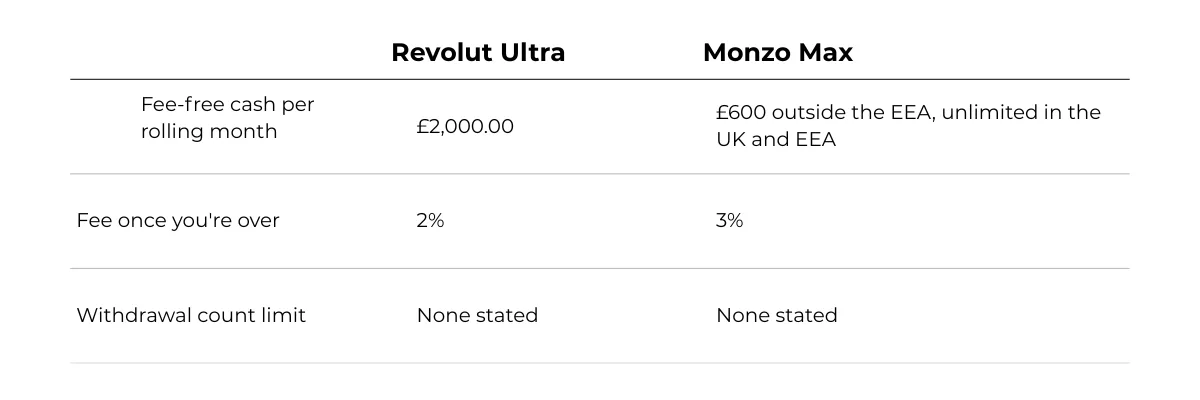
This is the headline number and it does favour Revolut, comfortably.
Sources: Revolut Ultra fees, Monzo travel fees.
Ultra gives you more than three times the headroom and charges a third less when you go over. On paper that's a hammering.
Two things take the shine off it. First, Monzo's £600 cap only applies outside the EEA. Anywhere in Europe, Max gives you unlimited fee-free cash, so the gap is precisely zero for the majority of British holidays. Second, the rolling thirty days is genuinely rolling. Monzo's window "resets exactly 30 days after your first withdrawal, rather than at the start of a new month," which catches people out at the back end of a trip.
And the money involved is smaller than the numbers suggest. Say you're in Thailand for a month and pull out £1,200 in cash, which is a lot for four weeks. On Max you get £600 free and pay 3% on the rest, so £18. On Ultra you pay nothing. You've saved eighteen pounds. Hold that against a £312 price gap and you can see where this is going.
To make the ATM allowance alone justify Ultra, you'd need to be withdrawing something like £1,400 above Monzo's cap every single month of the year. That's not a traveller. That's someone running a business in cash.
One more thing neither company shouts about: the fee-free allowance covers your bank's charge, not the machine's. Plenty of ATMs abroad, particularly in Thailand and across much of Asia, levy their own operator fee before you've even touched your bank's fee structure. No plan on either side absorbs that. Check the screen before you confirm.
Lounges: unlimited comes with a lot of small print
Here's the genuinely big difference, and the one that decides the whole thing.
Ultra gives you unlimited free access to 1,600+ lounges via DragonPass, food and drink included (Revolut Ultra).
Monzo Max does not give you free lounge access. It gives you a discounted rate. £24 per person, per visit, at LoungeKey lounges (Monzo lounge access). Your guests pay the same £24. There's no cap on how often you go.
Read the Monzo marketing quickly and you'd think lounges were included. They're not. You're buying a cheaper ticket, not a free one.
But Revolut's "unlimited" has more conditions attached than the word suggests, and they're buried in the lounge terms rather than on the plan page (Revolut lounge terms, lounge pass rules):
- One pass gets one person in. It's you, not you and whoever you're travelling with.
- Guests cost extra, and Revolut will not tell you how much until you're in the app. I looked. It isn't published anywhere on the website.
- You can't enter more than one lounge within a two hour window.
- Ultra members hit a thirty minute waiting period before a pass becomes available to scan again.
- Revolut reserves the right to suspend your access if it detects "unreasonably frequent use."
That last one is a proper eyebrow-raiser on a plan whose entire pitch is unlimited access. It's presumably aimed at people sharing passes, and I doubt a normal flyer will ever trip it, but it's there in writing.
Then there's a genuine oddity. Revolut has a feature called Smart Delay that gets you into a lounge free when your flight is delayed by an hour or more, provided you registered the flight at least two hours before departure. Premium gets it for you plus one companion. Metal gets it for you plus three. Ultra isn't listed at all (Smart Delay terms).
The logic is probably that Ultra already has unlimited access so it doesn't need a delay perk. Except Smart Delay covers your companions and Ultra's unlimited access doesn't. Which means, on a delayed flight, a Metal customer paying £14.99 a month gets four people into a lounge free, and an Ultra customer paying £55 a month gets one. I can't find anywhere Revolut explains this, and it looks like a gap nobody's gone back and tidied up.
Travel insurance: the section nobody reads and everybody should
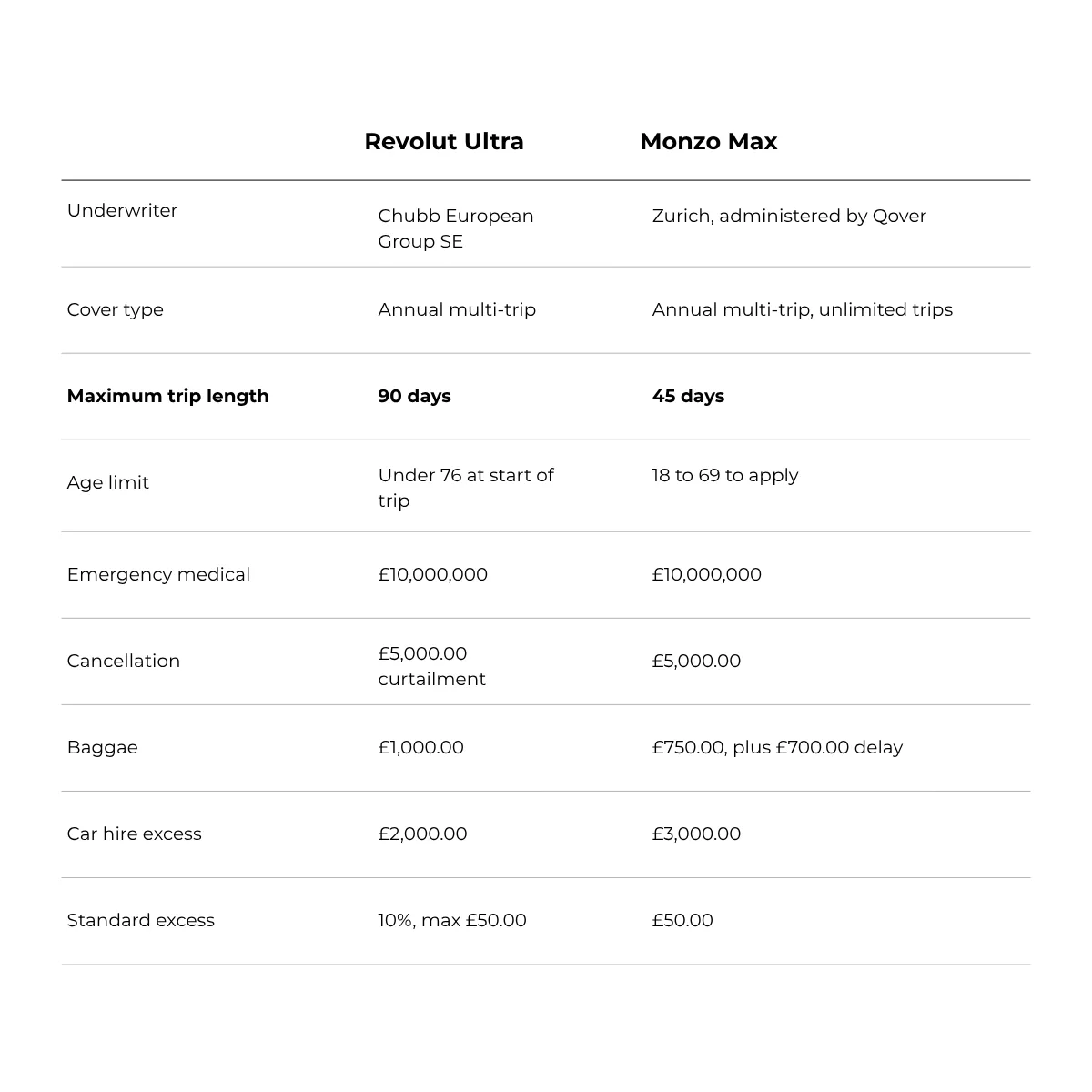
Both plans include proper travel insurance. Both are underwritten by real insurers. Both have an exclusion that will catch a decent chunk of people out.
Sources: Chubb Revolut Ultra policy booklet, Monzo Max travel insurance.
The trip length line is the one to look at. Ultra covers you for 90 consecutive days, Max for 45. If you're the sort of person who takes six weeks off, Monzo's policy stops covering you on day 46 and you might not notice until something goes wrong on day 50.
Now the exclusion. Neither policy covers pre-existing medical conditions, and neither will let you pay extra to add them.
Revolut's version, via Chubb, excludes anything diagnosed, treated or requiring hospital care in the twelve months before you booked.
Monzo's is significantly harsher. It looks back two years at anything that caused symptoms, needed treatment or medication, required a consultation, or needed investigation or follow-up. On top of that it excludes any cardiovascular or circulatory condition at any point in your life, and it spells out what that means: heart conditions, high blood pressure, blood clots, raised cholesterol, stroke, aneurysm.
Raised cholesterol. At any time. Ever.
There's no screening process, so nobody asks you and nothing stops you buying the plan. You just find out at claim time. Qover's own help pages confirm the cover "comes as a fixed package, so it can't be tailored or extended, even for an extra fee." One of the Monzo forum posters put it more bluntly: "The travel insurance is terrible if you've been the docs within the last 2 years or have any pre existing medical conditions."
If you're over about forty and on any regular medication, treat the travel insurance on either plan as a nice-to-have rather than a reason to subscribe, and price up a standalone policy that actually covers you.
Monzo also caps entry at 69 and ends cover at the plan anniversary after you turn 71. Revolut runs to under 76. If you're travelling in later life, that's a real difference and it's not on either landing page.
Want to see where your money actually goes? BudgetBro tracks it in any currency, free.
Everything else in the box
This is where the two plans stop being comparable, because they're selling completely different things.
Ultra's pitch is a subscription bundle. Financial Times Premium, WeWork credits, MasterClass, Uber One, NordVPN, Headspace, Sleep Cycle, Freeletics, Picsart Gold, The Athletic, ClassPass, Perplexity Pro, Chess.com, Headway, Tinder Gold and Turo. Plus 3GB of global eSIM data a month across 100+ countries, ten commission-free trades, savings up to 4.00% AER, and a platinum-plated card that weighs more than your phone.
Max's pitch is packaged bank account, modernised. Worldwide phone insurance from Assurant covering handsets up to £2,000 with a £75 excess and two claims a year. RAC breakdown cover that follows you rather than your car, with three European callouts a year. A weekly Greggs. A Railcard. Uber One. A monthly Vue cinema ticket. YouTube Premium Lite. Billsback refunds up to £150. Savings at 3.50% instant access, 3.65% on limited access, and a 5.00% saving challenge.
If you already pay for four or five of Ultra's subscriptions, the maths changes completely and this whole article becomes irrelevant to you. Be honest with yourself about that, though. Everyone thinks they'll use ClassPass.
The independent view on Max is that it stacks up if you use it. Be Clever With Your Cash itemised the bundle at roughly £47.55 a month and reckoned you're still ahead by about £29 a month after the price rise, conditional on actually using most of it (Be Clever With Your Cash). Conditional is doing a lot of work in that sentence. A weekly sausage roll is only worth £4.80 a month if you're near a Greggs every week and you want a sausage roll every week.
The maths, four ways
Right. Ultra on annual billing costs £312 a year more than Max. On monthly billing it's £432 more. Everything below uses the annual figure, because if you're spending this kind of money you'd be daft not to.
Since the only place Ultra clearly beats Max on hard cost is lounges, here's the break-even: at £24 a visit, you need 13 lounge visits a year for Ultra's free access to cover the price gap. On monthly billing, 18. And that's before you count anything Max includes that Ultra doesn't, like phone insurance and breakdown cover.
Thirteen lounge visits is roughly six or seven return trips where you use a lounge at both ends. Have a think about whether that's you.
Profile one: a fortnight in Spain
Two of you, package holiday, card for everything, a bit of cash for taxis and beach bars.
Spain is in the EEA, so Monzo gives you unlimited fee-free cash. ATM cost on both plans: nothing. Card spending: no fee on either. Insurance: fourteen days is comfortably inside both policies. Lounges: say two visits, out and back.
- Ultra: £540. Lounges free.
- Max: £228 plus £48 of lounges, so £276.
Max wins by £264, and free Monzo does the actual holiday for £0 plus £48 you'd have spent on lounges anyway. If this is your travel year, neither plan is a purchase. It's a donation.
Profile two: a month in Thailand
Non-EEA, cash-heavy, £1,200 withdrawn over the month, two lounge visits.
- Ultra: £540. Cash free, lounges free.
- Max: £228, plus £18 in ATM fees on the £600 over the cap, plus £48 of lounges. £294.
Ultra saves you £66 on the trip and costs you £312 more for the year. Max wins by £246.
This is the profile the marketing is aimed at and it's the one where the marketing falls apart fastest. The Thailand trip is exactly where you'd expect the £2,000 ATM allowance to earn its keep, and it's worth eighteen quid.
Profile three: six months backpacking
This is my old life, so I've got opinions. £1,000 a month in cash, four lounge visits, six months on the road.
Six months of Ultra is £270. Six months of Max is £114.
- Ultra: cash free, lounges free. £270.
- Max: £114, plus £72 in ATM fees on the £2,400 above the rolling caps, plus £96 of lounges. £282.
Ultra wins. By twelve pounds. After six months of long-haul travel. You could find twelve pounds down the back of a hostel sofa.
But here's the thing that actually matters on this profile, and neither company will tell you unless you go and read the policy booklet: your trip isn't insured by either of them. Ultra covers the first 90 consecutive days. Max covers 45. A six month trip blows straight through both. You need standalone backpacker insurance, and once you're buying that, the single biggest reason to pay for either plan has gone.
So on the profile where Ultra finally wins, it wins by twelve pounds, and you've still got to go and buy a proper insurance policy separately.
Profile four: the frequent flyer
Twenty departures a year, lounge every time.
- Ultra: £540. Twenty lounge visits, free.
- Max: £228 plus 20 × £24 = £480 of lounges. £708.
Ultra wins by £168, and it's the only profile where it wins properly.
Even here, three caveats. If you're travelling with someone, Ultra covers you and charges for them, whereas Max charges £24 for both of you equally, which narrows the gap fast. If your employer picks up the travel, none of this is your money anyway. And if you fly that often you may well already have lounge access through an Amex card or airline status, in which case you're paying £540 for a metal card and a Tinder Gold subscription.
Where the marketing stops matching the paperwork
I went through both companies' own published material for this, and both of them contradict themselves. Not in a scandalous way. In a nobody-owns-this-page way. But if you're being asked for £540 a year, the paperwork ought to be tidy.
Revolut claims Ultra delivers "over £9,000 in annual benefits," with subscriptions "worth £4,000 a year." At launch in June 2023 the same plan, at the same price, was pitched at "£4,100+" with subscriptions at "£2,100+" (Revolut launch blog, June 2023). The claimed value has more than doubled while the price hasn't moved a penny, and there's no published breakdown behind the current £9,000 figure. The 2023 one was itemised. This one isn't.
Worth understanding what that number is, too. It's the retail list price of every subscription in the bundle added together. It is not what you'd otherwise spend, unless you were genuinely about to buy all sixteen.
Revolut's plan comparison page also lists £3,000 a year of winter sports cover on Ultra. That line does not appear in the actual Chubb policy booklet, which instead lists £200 for missed activities, £1,500 for equipment and £5,000 for search and rescue. The policy booklet is the contract. The webpage isn't.
And the same comparison page says the Plus plan has a £1,000 monthly exchange limit while Revolut's own legal fee document says £3,000. Again, the legal document wins, but somebody should tell the marketing team.
Monzo says 1,100 lounges on its help page and "over 1,500" in the Max legal terms. Pick one. Several Monzo help pages also still quote the old £17 and £22 prices and the old £5 family add-on, a fortnight after the rise was announced.
None of this is fraud. All of it is the kind of sloppiness that should make you read the terms rather than the landing page.
The other question: who do you want holding your money
If you're moving your main account, features are only half of it.
Revolut got its full UK banking licence on 11 March 2026, exiting the mobilisation phase it had been stuck in for years. Deposits are now covered by the FSCS (Revolut). That's a material upgrade and any article older than about six months will tell you otherwise, so ignore those. Revolut reported $6bn of revenue and $2.3bn of profit for 2025, with 68.3 million customers globally and around 13 million in the UK.
Monzo reported £1.7bn of revenue and £172.6m of adjusted profit before tax for its 2026 financial year, with 15.2 million customers and over 1.6 million on paid plans.
Both are real, profitable banks now. Neither is a startup you need to worry about.
The number I'd actually weigh is complaints. Which? used Freedom of Information requests to the Financial Ombudsman and found Revolut logged 1,875 authorised push payment fraud complaints between January and August 2025, against Monzo's 1,063 and Barclays' 1,161, despite Barclays having roughly 20 million UK customers to Revolut's 12 million at the time (Which?, October 2025). Revolut's response pointed to careful case-by-case investigation and said it prevented over £600m of potential fraud against customers in 2024.
I'm not going to tell you that settles anything. Complaint volumes reflect customer mix, product mix and how easy a firm makes it to complain, not just how well it treats people. But Revolut has been top of that particular table for a while now, and Monzo is second, so it cuts at both. If you're weighing which one holds your salary, it belongs in the calculation.
Getting out is harder than getting in
Worth knowing before you tap subscribe.
Ultra has a six month minimum term on monthly billing. Leave inside it and you'll pay a break fee of two months' subscription plus the current month, and there's a £50 charge for the Ultra card itself if you cancel within six months of signing up. Pay annually and after the fourteen day cooling off period there's no refund at all (Revolut paid plan terms).
Max normally has a three month minimum term, currently waived until 13 October 2026. Within fourteen days you get a full refund minus card and Railcard fees. Between fourteen days and three months, normally only in cases of exceptional hardship. And if you've claimed the Railcard, you'll be charged a fee to keep it, though Monzo doesn't publish how much.
Neither is outrageous. Both are worth knowing before rather than after.
So which one
If you want the short version:
Get Monzo Max if you take a few trips a year, want travel insurance and phone insurance and breakdown cover bundled at a price that's hard to beat buying separately, and you'll genuinely use the Greggs, the Railcard and the cinema ticket. Check the pre-existing conditions rules first. Check the 45 day trip limit if you take long holidays.
Get Revolut Ultra if you're in an airport lounge more than thirteen times a year, or you already pay for a good handful of those subscriptions, or you take single trips longer than 45 days and shorter than 90. That's a narrow door and most people saying yes to it are guessing at their own lounge habit.
Get neither if you're most people. Two holidays a year, card for everything, a bit of cash out of the wall. Monzo's free account handles that for nothing, and £540 a year is a long weekend somewhere.
The thing that gets me about both of these, and the reason I ended up writing three thousand words about it, is that they're sold on the biggest number on the page. £2,000 fee-free ATM. Unlimited lounges. £9,000 of benefits. And when you sit down and work out what those numbers are worth on a trip you'd actually take, it's eighteen quid here and forty eight quid there.
Subscriptions are the easiest money in the world to lose track of, because they're small, they're monthly, and they arrive on a day you're not thinking about them. £55 a month is £660 a year on monthly billing. Nobody signs up for £660. They sign up for fifty five quid and then don't look again.
Whatever you decide, put a reminder in your phone for a month before the renewal and ask yourself how many lounges you actually sat in. If the honest answer is two, you know what to do.
Prices and terms correct as at 24 August 2026. Nothing here is financial advice, I'm not a financial adviser, and you should read the actual policy documents before buying an insurance product. No affiliate or referral links have been used in this article.
Comments(1)
Really good article this. Revolut Ultra is a no brainer for airport lounges alone.
Related Articles

Australia's Labour Government Targets Backpacker Visas in New Immigration Plan
Labour's new immigration plan takes aim at backpackers, students and visa overstayers in Australia, with the Greens calling it a race to the bottom.
· 2 min read
Australia to Cut Working Holiday Visa and Student Visa Numbers
Australia is reportedly planning to cut student visa and backpacker visa numbers as part of a broader migration kerb, according to dw.com.
· 2 min read
Thailand Visa Rules Change for UK Travellers From 15 September
The UK Foreign Office has flagged incoming changes to Thailand's visa rules from 15 September, but the specifics are still thin on the ground.
· 2 min read
Latest Articles
View all articles
Malta in December: A Day of Sun from Birmingham for £64
Malta in December averages 17C. From Birmingham on Sunday 13 December it's £64 return, with six hours in Valletta and the Grand Harbour.
· 4 min read
Extreme Day Trips: What They Are, Why They're Fun and How Cheap They Get
An extreme day trip means flying to another European city in the morning and home the same night. Why people do it, why it's fun and how cheap it really gets.
· 7 min read
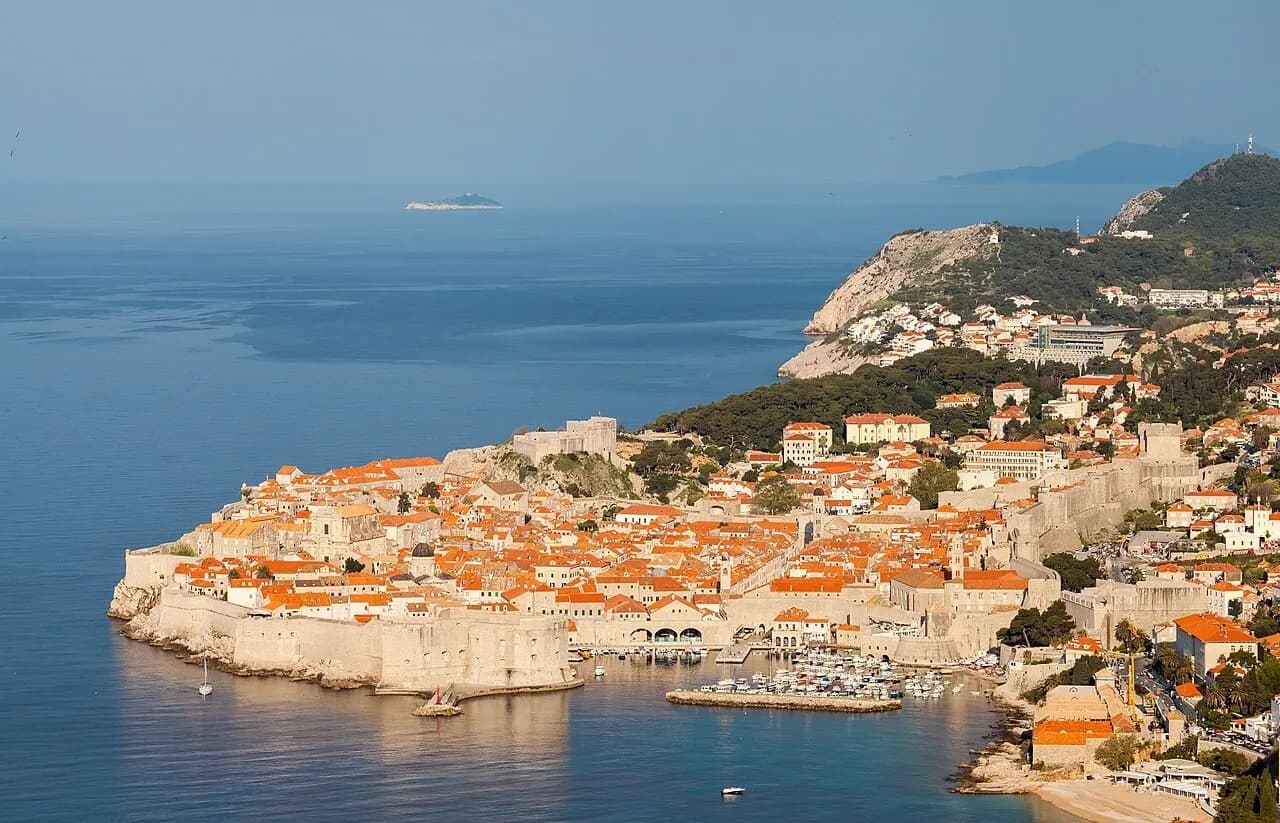
Gatwick to Dubrovnik Flight Time, and a Day Trip Before the Season Ends
The flight from Gatwick to Dubrovnik is about 2 hours 45 minutes. That's short enough for a day trip, but only until late October. Here's the one we checked.
· 4 min read