
Mini Lesson 8: The "Well Done" Trap and Words That Don't Translate
In Brazilian Portuguese, "bem feito" doesn't mean "well done", it means "serves you right". Calling someone "miserável" isn't about a bad mood either, it's a serious insult meaning wretched or despicable. To actually praise someone, say "Mandou bem!" or "Boa!" instead.
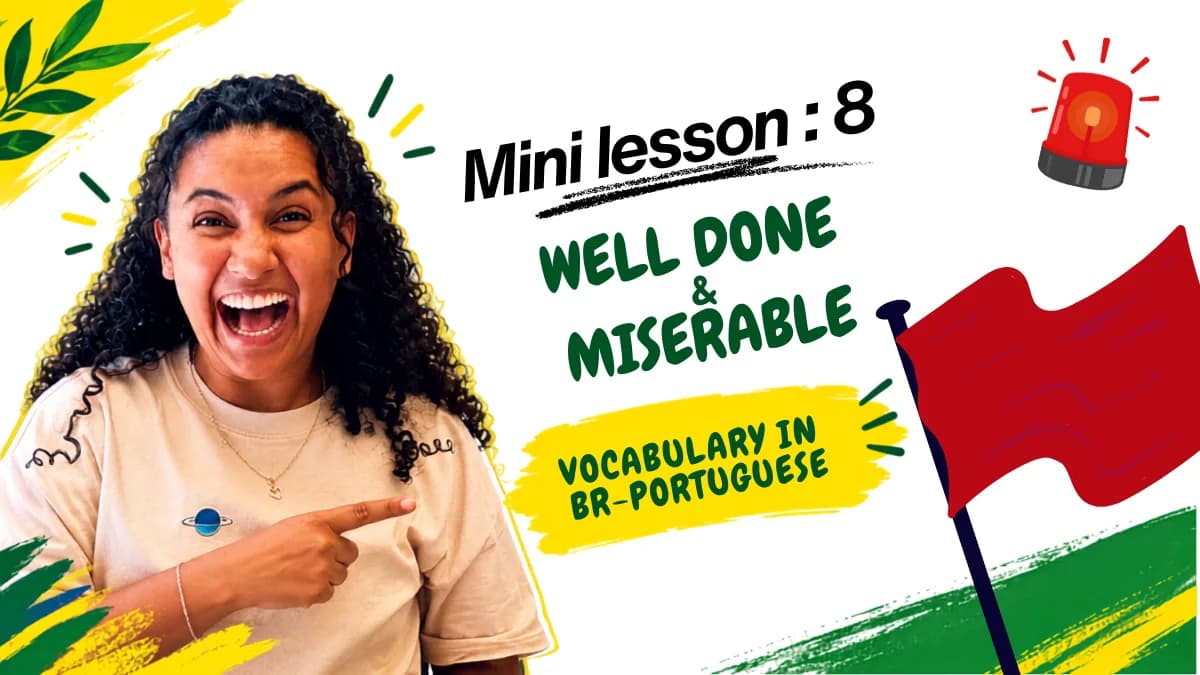
In Brazilian Portuguese, translating a phrase word for word from English can completely flip its meaning. “Bem feito” looks like “well done” but actually means “serves you right”, and “miserável” looks like “miserable” but is a proper insult, not a mood.
Why You Can’t Just Translate Word by Word
This is the trap that catches almost everyone learning Portuguese. You look up a single word, it matches perfectly in the dictionary, and you drop it into a sentence with zero context. Except words don’t live alone, they live inside a culture, a tone, a history of how people actually use them. Get that part wrong and you can accidentally insult someone’s nan while trying to pay them a compliment, or sound cold when you meant to be warm. Today’s lesson is a proper example of exactly that going wrong, in real life, in a real WhatsApp chat.
The “Well Done” Trap and Words That Don’t Translate
This one came from a real WhatsApp exchange with my British husband, so you know it’s genuine
The WhatsApp Misunderstanding
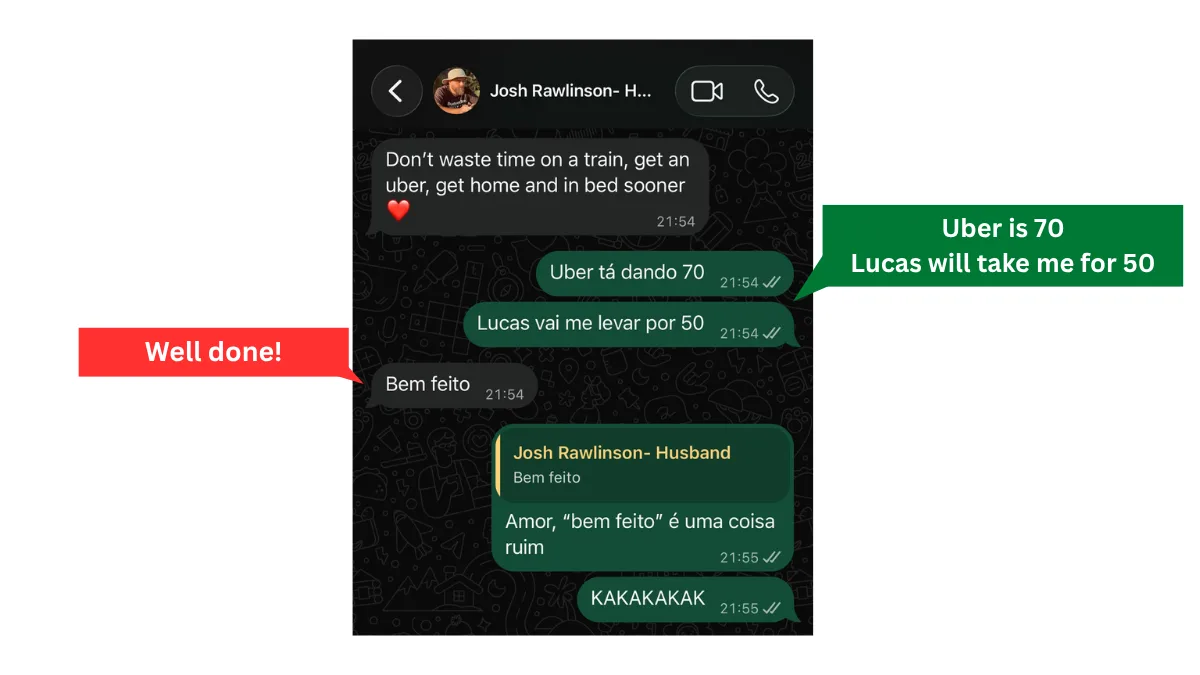
Josh meant “Well done, good thinking on the money!” What landed was something closer to a smirk and “serves you right.”
WELL DONE vs. BEM FEITO
- In the UK: “Well done” is warm, it praises someone’s achievement or a smart call
- In Brazil: “Bem feito!” is what you say when someone gets exactly what they deserved after messing up, the same energy as “serves you right” or “told you so”
If you want to praise a Brazilian for a good decision, skip “bem feito” entirely. Use “Boa!”, “Mandou bem!” or “Que bom!” instead.
To be fair, I knew what Josh meant because I know him, and most people will probably work it out from context too. It just sounds odd, not offensive. Some false friends aren't so forgiving though. Take "miserable", it's the one that can actually make a room go quiet.
The Drama of “MISERABLE” vs “MISERÁVEL”
Another word that carries a completely different weight the moment it crosses the Atlantic.
- In the UK: “He’s a bit miserable today” just means a grumpy mood.
- In Brazil: calling someone “miserável” is a proper insult, it means wretched or despicable, someone stingy and cruel enough to have no soul. Tell a sad Brazilian friend they look “miserável” and they’ll think you’ve gone for their character, not their mood For a grumpy mood, say “De mau humor”.
Try this!
Next time your partner or a friend saves money or pulls off something clever, resist the urge to translate “well done” directly. Give them a high five and say “Boa! Mandou bem!” instead.
And regarding the word "miserável", don't use it. 😅
If today’s lesson made you want more, I’d love to have you as a student.
I’m Samar, I’m Brazilian! I teach Brazilian Portuguese, one-on-one or in small groups, for anyone who actually wants to learn properly.
Comments
No comments yet. Be the first to share your thoughts.
Related Articles

Mini Lesson 7: Complaining About the Weather Like a Brazilian
Forget British understatement, Brazilian weather talk is pure performance.
· 2 min read

Mini Lesson 6: The Counter Survival Kit: How to Order at a Brazilian Bakery
Forget textbook phrases, this is how Brazilians actually order at a bakery counter.
· 2 min read

Mini Lesson 5: Why Everything in Brazil Sounds Cuter Than It Is
The real meaning behind Brazil's favourite grammar trick, -inho and -inha, and why it has nothing to do with size.
· 1 min read
Latest Articles
View all articles
Nomad Cruise: Southampton to New York
Remote-work networking with daily programming while crossing the Atlantic.
· 1 min read

Australia to Cut Working Holiday Visa and Student Visa Numbers
Australia is reportedly planning to cut student visa and backpacker visa numbers as part of a broader migration kerb, according to dw.com.
· 2 min read

Athens Nomad Fest
A week of talks, masterminds, excursions, and cultural immersion in Athens.
· 1 min read