
Mini Lesson 7: Complaining About the Weather Like a Brazilian
Brazilians exaggerate the weather rather than understate it. Tá pegando fogo means unbearably hot, um frio desgraçado means a miserable cold. Dragging out the vowels for effect matters more than getting the grammar perfect.
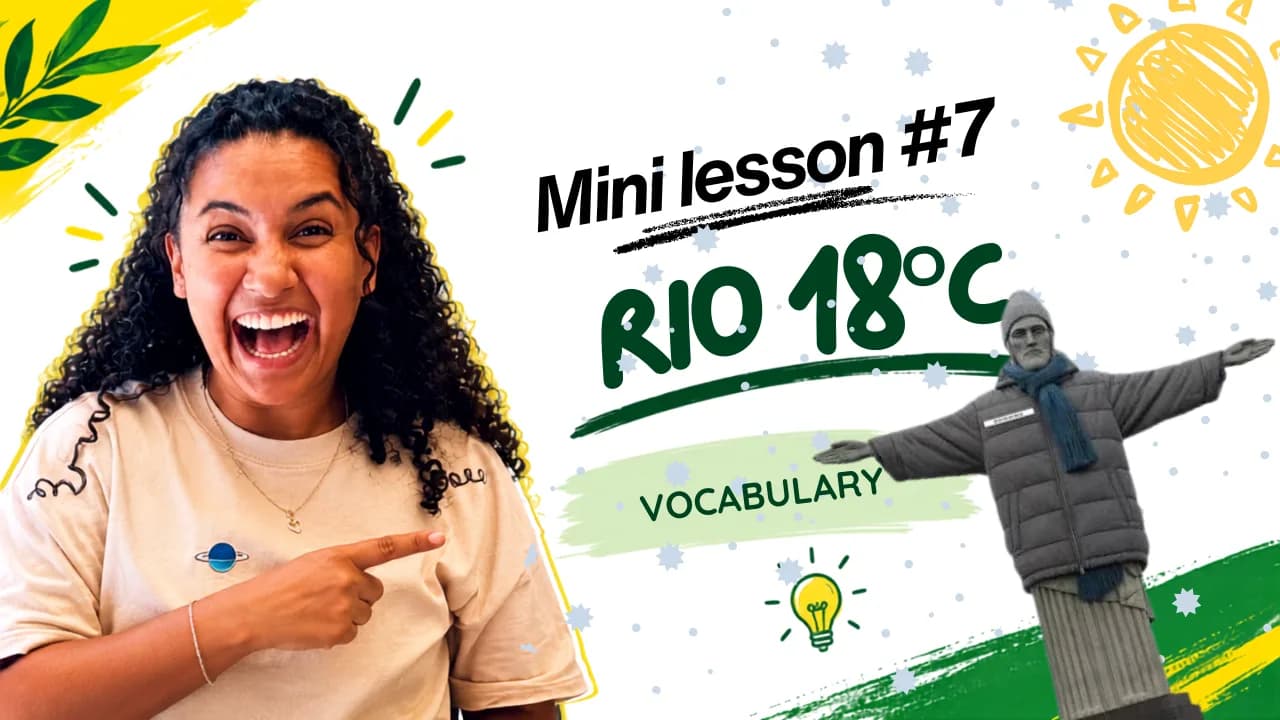
Complaining About the Weather Like a Brazilian
Brazilians don't do polite British understatement about the weather, they go full performance.
The hero move
It's not the word, it's the exaggeration. "Tá um caaaalor" dragged out with a groan beats the grammatically perfect version said flatly, every time. Heat is where Brazilians get the most creative:
- Tô derretendo = I'm melting!
- Tem um sol pra cada um = It's scorcher hot today!
Literal translation: There's a sun for each one
- Tá um calor de rachar = It's absolutely boiling!
Literal translation: It's a heat of cracking
- Tá um forno lá fora = It's like an oven out there
- Tá um forno lá foratah um for-no lah fo-rahIt's like an oven out there
- Um calor dos infernos = It's baking hot!
Literal translation: A heat from the hells
- Um calor dos infernosum ca-lor dos een-fair-nosIt's baking hot!
When the temperature drops to 18°C, the drama begins.
- Tô batendo queixo = My teeth are chattering!
Literal translation: I'm banging my chin
- Um calor dos infernosum ca-lor dos een-fair-nosIt's baking hot!
- Tá um gelo lá fora = It's parky out there!
Literal translation: It's ice out there
- Tá um gelo lá foratah um jay-lo lah fo-rahIt's parky out there!
- Tá um Frio de doer os ossos = It's bitter
Literal translation: Cold of hurting the bones
- Tá um frio de doer os ossostah um free-o jee doo-air os o-sosIt's bitter
That 18°C threshold is very much a Rio thing though. Down in the South, Curitiba, Gramado, winters get properly cold, frost and all, so save "um frio desgraçado" for a real cold snap down there, not just a breezy afternoon.
In a sentence
Gente, tá pegando fogo hoje, hein? = God, it's boiling today, isn't it?
Try this
Say "tá um calooor" out loud on your own until it feels a bit embarrassing. That's when you've got it right. This is one that genuinely lands faster hearing someone do it than reading it on a page.
- Tá um calortah um ca-loh-h-h-rIt's hot!
The literal translation trap
The above translations show you why it's important not to try and translate literal phrases from one language to another, because more often than not, it does not work.
If you feel like you want to see another mini lesson on this, let me know and I’ll go deeper!
If today's lesson made you want more, I'd love to have you as a student.
I'm Samar, I'm Brazilian! I teach Brazilian Portuguese, one-on-one or in small groups, for anyone who actually wants to learn properly.
Comments
No comments yet. Be the first to share your thoughts.
Related Articles

Mini Lesson 6: The Counter Survival Kit: How to Order at a Brazilian Bakery
Forget textbook phrases, this is how Brazilians actually order at a bakery counter.
· 2 min read

Mini Lesson 5: Why Everything in Brazil Sounds Cuter Than It Is
The real meaning behind Brazil's favourite grammar trick, -inho and -inha, and why it has nothing to do with size.
· 1 min read

Mini Lesson 3: Beer Can and Bottle Sizes in Brazil
From latinha to litrão, the words Brazilians actually use to order beer by size, no story this time, just straight vocabulary.
· 1 min read
Latest Articles
View all articles
Thailand Visa Rules Change for UK Travellers From 15 September
The UK Foreign Office has flagged incoming changes to Thailand's visa rules from 15 September, but the specifics are still thin on the ground.
· 2 min read

Thailand Visa Changes for Australian Tourists: What News.com.au Reported
News.com.au reported new Thailand visa rules for Australian tourists. Here's exactly what's known so far, and why you should check the official channels before booking.
· 3 min read

Why Lisbon Is Europe's Coolest Capital Right Now
Lisbon's affordable rents, nightlife and hillside streets above the River Tagus have made it the European capital of cool, with younger travellers staying longer than ever.
· 2 min read