Bro's Blogs
How does the Middle East Crisis Affect You?
How the Middle East Crisis Is Affecting Travel Across Southeast Asia: Daily Updates For Travellers
By Nathan James
|(Updated 4 avril 2026)· 5 min read
In addition to our daily updated Asia Travel Update page, BudgetBro has created this new page to monitor the effects within Southeast Asia for travellers.
The ongoing US-Israel war on Iran has effectively shut the Strait of Hormuz to maritime traffic and the ripple effects are hitting travellers across Southeast Asia right now. From fuel rationing in Sri Lanka to rising transport costs in Thailand, Vietnam and the Philippines, here's what you should be aware of if you're travelling the region/planning to.
The situation is changing fast. If the Strait of Hormuz reopens, markets and supply chains can recover relatively quickly. If it remains closed beyond a few more weeks, the impact on fuel availability and transport costs across Southeast Asia will deepen.
We'll update this article as things change.
Why Does Whats Happening in the Strait of Hormuz Matter to Me as a Traveller in SEA?
Around 60% of Asia's crude oil imports pass through the Strait of Hormuz. With that route effectively closed, Southeast Asian governments are scrambling to manage fuel reserves, and the knock-on effects for travellers are extremely visible on the ground.
This isn't just a news story. It's affecting the cost of your tuk-tuk, the price of domestic flights, and whether the bus you're counting on will actually show up.
Should I still go to Southeast Asia?
If you're about to travel to Southeast Asia, yes still go, but budget for more time and money for getting around.
Be aware that many hostels/guesthouses run on generators so you may experience power cuts.
Sri Lanka:
Sri Lanka has moved the fastest and most drastically. Since the 15th March 2026, the government activated a National Fuel Authorisation System requiring all vehicles to use a registered QR code before purchasing fuel. No QR code, no fuel, at any station in the country.
What does this mean for you if you're travelling in Sri Lanka? If you're renting a vehicle or hiring a private driver, make sure your rental company or driver has registered their vehicle on the official portal as without it, they cannot legally fill up.
Weekly fuel quotas are now enforced per vehicle category: motorcycles are limited to 5 litres, cars and tuk-tuks to 15 litres, and vans to 40 litres per week. 15 litres car allowance covers roughly 150–200km depending on the vehicle, meaning drivers doing multiple tourist runs daily are going to hit their limit fast.
- Confirm with your driver or rental company that they are registered on fuelpass.gov.lk before you travel
- Expect some private drivers and tuk-tuk operators to charge more, or be unavailable mid-week as they exhaust their weekly quota
- Budget more time for overland journeys, queues at stations may be longer and some trips may need to be broken up
- The government has also declared a mid-week public holiday to conserve fuel, so factor potential closures into your plans
Thailand:
Thailand is already facing serious economic issues this year, and the oil shock has hit at the worst possible time. The government has imposed a temporary price cap on diesel and ordered most government agencies to work from home to reduce fuel demand. This is not so much relevant to tourists, however, what you will feel: rising costs for transport. Songthaews, minibuses, and private transfers are all run on diesel. You should expect to see fare increases, especially on longer routes between cities.
There are also warnings that a prolonged conflict could significantly dent Thailand's tourism industry directly, as jet fuel costs push up flight prices and affect how many visitors the country receives overall.
- Agree transport costs upfront rather than agreeing to pay on arrival
- Shop around for long-distance bus trips
- Domestic flights with AirAsia, Vietjet etc., are still operating normally but fares are increasing daily (Set up flight price tracking with Skyscanner, Google Flights)
Vietnam:
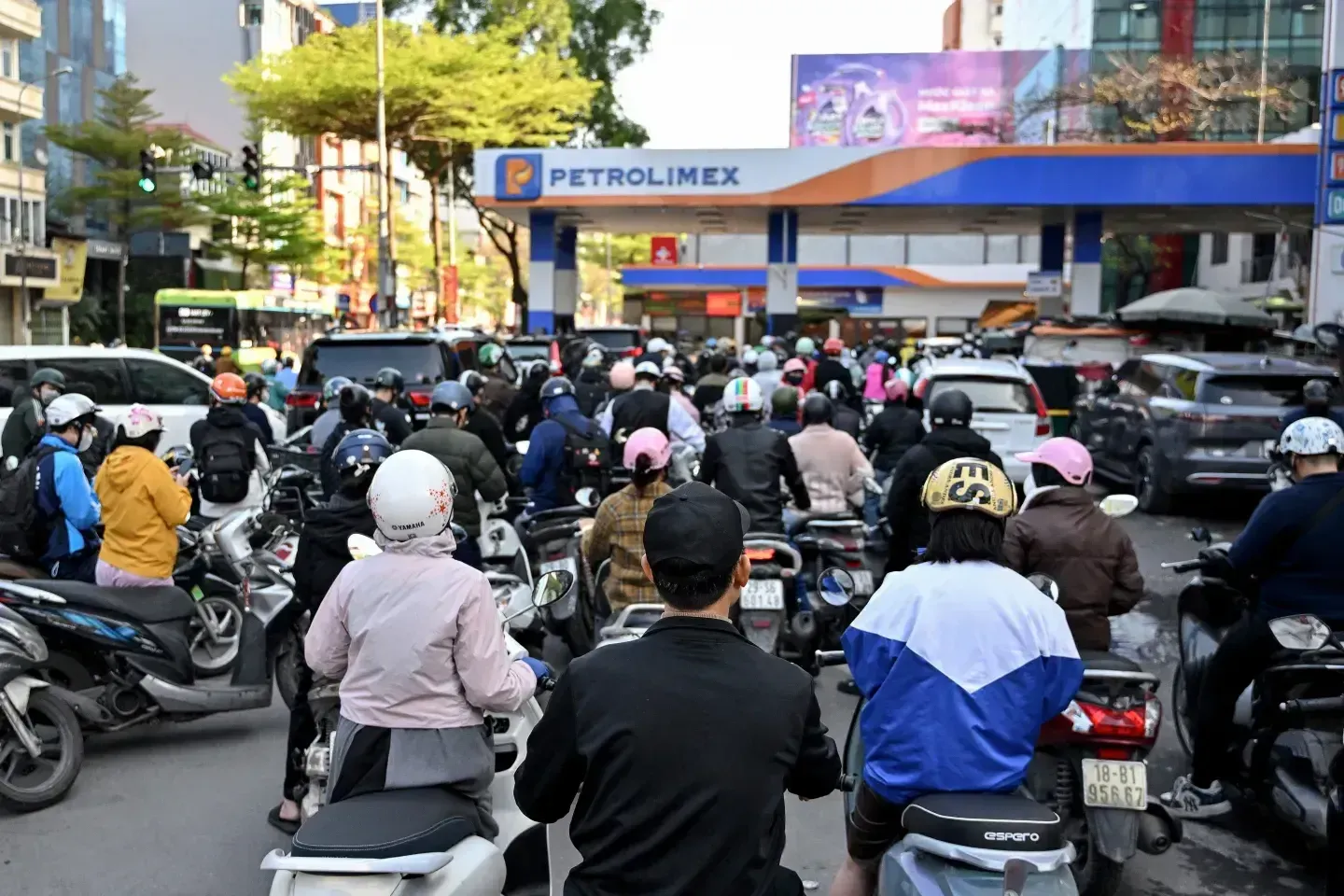
Vietnam has announced plans to source crude oil from non-Middle Eastern suppliers, but experts have suggested it will only cover six days of national consumption. With existing reserves reportedly at around 20 days, Vietnam is at real risk of shortages.
The government has told people to limit unnecessary travel and stay home where possible.
- Overland transport between cities is fine now but may become disrupted if the situation worsens
- Motorbike rental fuel access for small vehicles (low weekly quotas if rationing is introduced) could become an issue
- Book domestic flights sooner rather than later as jet fuel costs rise
Philippines, Indonesia and Cambodia:
The Philippines sources around 96% of its oil from the Persian Gulf region and has already been hard hit — the peso has weakened significantly and fuel price increases are filtering into all transport costs. The government has moved to a four-day work week to conserve fuel.
Indonesia, despite being an oil producer, imports more than a third of its crude. Cambodia, Laos and Myanmar have very limited refining capacity and rely on exported petroleum products from Thailand and Vietnam — both of which are now under pressure to conserve their own supplies.
- Overland border crossings that rely on bus or shared transport may see service reductions or higher fares
- Boat transport in coastal areas and between islands can be affected as diesel prices rise
- If you're island hopping, particularly in the Philippines or Indonesia check with operators before you book that services are still running as normal
Domestic Flights: Expect Fares to Rise
Jet fuel prices are a direct function of oil costs, and those are rising sharply everywhere right now. Airlines typically adjust fares within two to four weeks of significant fuel cost increases. Budget airlines in Southeast Asia, which already operate on thin margins are likely to pass costs on faster than full-service carriers.
If you are looking to book domestic flights, booking now is better than waiting. Fares on routes within Thailand, Vietnam, the Philippines and Indonesia are all likely to trend upward while the Strait of Hormuz remains closed.