
BudgetBro.
HomeAboutAdvertisersExploreContact

BudgetBro

BudgetBro is a free travel budgeting app for backpackers and budget travellers. Track expenses, set trip budgets, and more with AI-powered companions.

RedditInstagramTikTokYouTube

Quick Links

  • Home
  • About Us
  • Advertisers
  • Contact Us
  • Explore
  • Get BudgetBro
  • Press

Free Tools & Games

  • SEASeeker
  • Chrome Extension

Compare

  • Alternatives to BudgetBro
  • BudgetBro vs TravelSpend
  • BudgetBro vs Tripcoin
  • BudgetBro vs Expensify
© 2026 BudgetBro. All Rights Reserved.·Nomu Studios LTD: Company number 16552052
RSS FeedPrivacy PolicyTerms
  1. Home
  2. /
  3. Articles
  4. /
  5. Full Guide to Europe’s Digital Nomad Visas in 2026
Guides

Full Guide to Europe’s Digital Nomad Visas in 2026

Is Europe the new Southeast Asia for Digital Nomads in 2026?

By Joshua Rawlinson
|
November 29, 2025(Updated April 14, 2026)· 8 min read
Share
BudgetBro

In this article

  1. 1. Why Southeast Asian Nomads Eventually Look Towards Europe
  2. 2. What a digital Nomad Visa Actually Means
  3. Standard Criteria (most European Countries Ask for This Stuff)

Why Southeast Asian Nomads Eventually Look Towards Europe

Southeast Asia is the starter map for most digital nomads. Cheap living and fast WiFi. It’s a place on planet Earth many will call paradise, and they’re not wrong. Southeast Asia has a lot to offer, and even I’ve fallen in love with it time and time again. But the longer you stay, and the older you get, you realise something interesting about the nomad community: a lot of them eventually want Europe. And it’s not to escape from Asia, it’s to grow from it.

Nomads in Southeast Asia often reach a point of wanting more. Asia is fun, but it’s chaotic. When many of us hit 30, we start prioritising different things. We want to pay by card more often. We want transport that shows up when it says it will. We want reliability without losing the ability to move around and explore. And that’s where Europe dominates Southeast Asia: infrastructure, stability, and long-stay lifestyle that still lets you live freely without constantly worrying about visas.

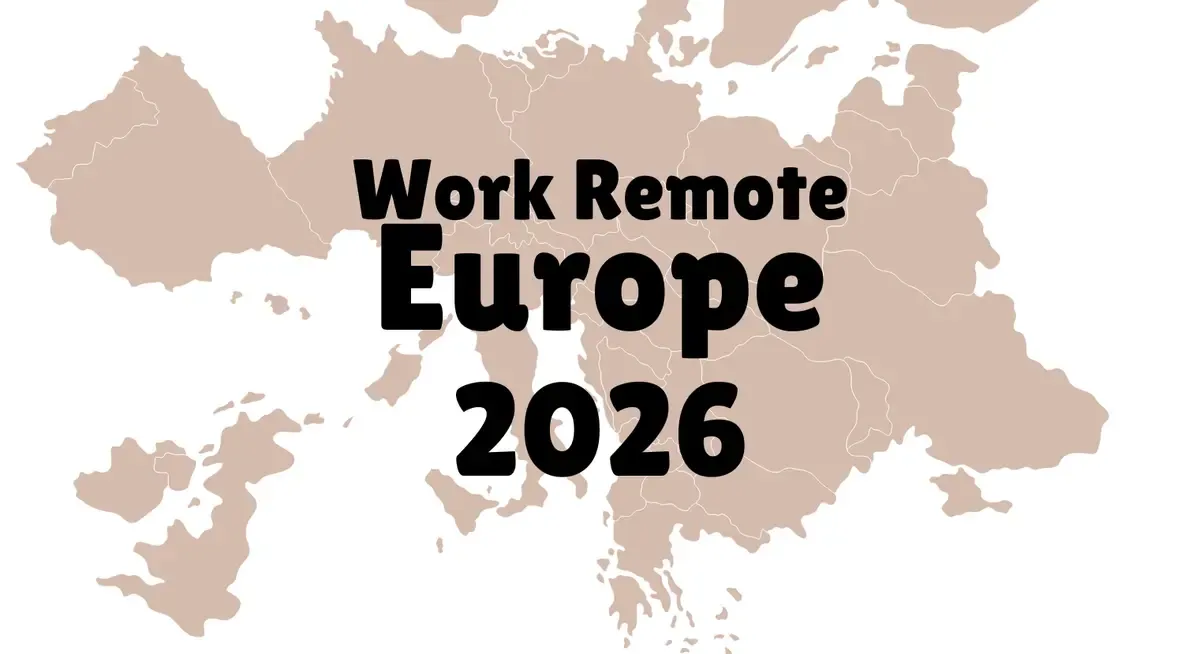
Right now, a growing list of European countries are offering formal digital nomad visas or remote worker residence permits. These let you work legally while earning your income from abroad, but live in Europe long-term without doing the old endless tourist visa shuffle.

Some of the most popular 2026 options include:

  • Starter friendly for Portuguese speakers: Portugal (Brazilian Portuguese is better, my wife would kill me if I said any different)
  • Coast + chill lifestyle: Croatia, Greece
  • Built for online workers and digital infrastructure: Estonia
  • Mediterranean pace + stacked paperwork: Spain, Italy
  • Newer to the party but worth watching: Slovenia

    Each country has different rules, fees, processing times and minimum income requirements, which we’ll break down properly in this guide. But the repeating backbone tends to be the same: prove your income, prove your remote work setup, show valid insurance, show accommodation, and have a clean record. It’s less about impressing them, and more about proving you won’t fall through the cracks of their system.

    After living in Southeast Asia for nearly 3 years, I miss the cold (sometimes). I miss autumn when all the leaves fall off the trees. And I MISS Christmas dinner with the family. Anyone want to pay my ticket back so I can be with them for Crimbo, please? hehe.

What a digital Nomad Visa Actually Means

A digital nomad visa (sometimes called a remote worker residence permit) lets you live in a country while working online for an employer or clients based anywhere except the country you’re applying to. It is a legal permit for people who make their money abroad, but want to live local for a while.

Standard Criteria (most European Countries Ask for This Stuff)

To get approved, you generally need to prove:

  • You actually work remotely (obvious I know but it's the deciding factor.)
  • Your income comes from outside the country.
  • You hit their minimum income requirement.
  • You have health insurance
  • You have an address or play to stay (rental contract etc...)
  • A clean legal record.
  • A valid passport with a decent time left on it.

Requirements, Costs & Application Process per Country

Portugal

  • Visa type: "D8 / digital nomad / remote work" visa.
  • Income requirement: Minimum €3,280/ month.
  • Duration: Initial permit is short stay / long term residency visa but once in Portugal you can convert to a 2 year residence permit. Total stay can usually reach 5 years.
  • Cost: Application €90-€100 and residency card €150-€170
  • Length of application: Visa decision 30-60 working days. Residency card can take another 30-60 days depending on appointment availability.

Potential pitfalls - Income threshold is high compared to the cost of living outside Lisbon / porto, AIMA delays are famous and you'll likely need a NIF (tax number) and sometimes a local bank account sorted early on... Which let's face it, isn't a bad thing.

Perks - Croatia is now in Schengen meaning you can travel round Europe easily.

Croatia 

  • Visa type: Temporary stay of a digital nomad
  • Income requirement: at least €3,295/ month or proof of savings - €39,540 for 12 months and €59,310 for 18 months.
  • Duration: Up to 18 months under recent rules.
  • Cost: €100-€150 once you include the residency card.
  • Length of application: 30-90 days depending if you apply abroad or inside Croatia.

Potential pitfalls - Visa's cannot be renewed in most cases, so more of a one-season base than a long term residency route. They're strict on proof of funds if you are not able to prove your monthly income and health insurance / address proof are non-negotiable.

Perks - Croatia is now in Schengen meaning you can travel round Europe easily.

Greece

  • Visa type: Digital Nomad Visa (national visa)
  • Income requirement: Minimum 3,500/ month, higher with dependents.
  • Duration: Up to 12 months then you can apply for a 2 year residency permit with chances to extend further/
  • Cost: €75-€150 plus additional residency card fees when you switch to a permit.
  • Length of application: 2-4 weeks and for the residency permit, 1-3 months is common.

Pitfalls - High income required compared to local Greek wages, Greek bureaucracy is.... very Greek. Long waits for the card itself even after approval.


Perks - lower everyday costs than a lot of Western Europe. You've got beautiful islands, good food and great culture. Schengen travel once you're on a residency permit.

Spain 

  • Visa type: Spain Digital Nomad Visa or Telework Visa.
  • Income requirement: Minimum €2,762.00/ month
  • Duration: Up to 12 months, exchangeable to residency permit which can be extended up to 3 yers initially.
  • Cost: €75-€80 at most embassies. Residency card small additional fee at police station.
  • Length of application: 20-60 days.


Pitfalls - Paperwork is detailed: contracts degree, experience proof, private health insurance, background checks. "I'll wing it" vibes won't bode well here, be prepared.

Perks - Access to special expat tax regime 24% up to €600K per year.


Italy 

  • Visa type: Digital Nomad ( launched for non-EU remote workers.)
  • Income requirement: Minimum €2,333.00/ month.
  • Duration: 1 year residency permit with the option to renew if you still meet the criteria.
  • Cost: Visa fee€100-€120 and residency permit another €80-€100.
  • Length of application: 30 - 90 days from consulate application to visa, additional time needed in Italy for the local appointments and finally, the residency card.


Pitfalls - Italian bureaucracy is very slow, new rules are still being "interpreted" so experiences will differ and you're expected to be a highly skilled person with clean paperwork.

Perks - It's Italy... hehe.


France 

  • Visa type: No dedicated nomad visa but remote workers use the Long-Stay Visitor Visa (VLS-TS)
  • Income requirement: Minimum €1,400.00 / month.
  • Duration: up to 12 months, often renewable annually.
  • Cost: Long stay visa is around €99 plus tax stamp when you validate it in France.
  • Length of application: 15 - 60 days through French consulates.


Pitfalls (big one) - As of June 2025, the French tax authorities officially clarified that remote work is not allowed on their visitor visa, even if your clients are all abroad. If they catch you "working from France" they may consider you employed there for tax reasons... Tread carefully.

Perks - It's simple, not much hassle, especially if you're living on passive income or savings.

Germany 

  • Visa type: Freiberufler (freelance) visa
  • Income requirement: There's no fixed legal minimum but an income of at least €9,000- €12,000 per year, or solid client contracts, or proof of savings.
  • Duration: 1-3 years for the initial freelance residency permit.
  • Cost: Visa application €75 and €100- €110 for residency permit once in Germany.
  • Length of application: 30 - 60 days, local appointments at the local Ausländerbehörde (foreigners office) can add additional time.


Pitfalls - Many expect you to have German clients or an "economic interest" in the region, so being 100% foreign client based can be difficult. German bureaucracy can and will wear you down.

Perks - Ummmm, Oktoberfest?

Estonia 

  • Visa type: Short stay C or long stay D visa.
  • Income requirement: Minimum €4,500 NET /month in the 6 months before applying,
  • Duration: Maximum stay around 12 months (depending on visa)
  • Cost: C-visa €80, D-visa €100.
  • Length of application: 15 - 30 days once you've submitted a complete application at the embassy.


Pitfalls - Very high income requirement, especially when compared to the cost of living, you'd feel like a king in Estonia. Cold climate and long winters are not everyone's cup of tea and it's time limited visa with no path to residency by itself.

Perks - Hyper-digital government e-services, easy online bureaucracy (kinda makes me want to go) and it's a super clean, well organised, tech-friendly base in Europe.

Malta

  • Visa type: N0mad Residence Permit
  • Income requirement: Minimum gross of €42,000 per year form foreign sources, which is around €3,500/ month.
  • Duration: Valid for 1 year but can be renewed up to 4 years total.
  • Cost: €300 plus €27 per residence card.
  • Length of application: 30 - 60 days once everything has been submitted.

    Pitfalls - High income requirement, small island and rent / cost of living can be substantially higher compared to other parts areas in Europe.

    Perks - English is widely spoken, super easy day-to-day life, Schengen travel rights and very clear remote working rules. Foreign income can get favourable tax treatment.

Want to come back to this?

#Digital Nomad#Visa#Europe#2026

Joshua Rawlinson

Founder of BudgetBro

InstagramTikTok

Comments

No comments yet. Be the first to share your thoughts.

Leave a comment

0/2000

Comments are reviewed before appearing. Keep it respectful.

Related Posts

BudgetBro

Best Travel Insurance for Southeast Asia

China Travel Arrival Update 2026 | BudgetBro

China Arrival Card Online: Full Guide for 2026

BudgetBro

Yi Peng Lantern Festival Thailand 2026: Your Complete Guide